
Blog
Difference Between Fragrance Oils and Essential Oils
Jul
🌿 Difference Between Fragrance Oils and Essential Oils
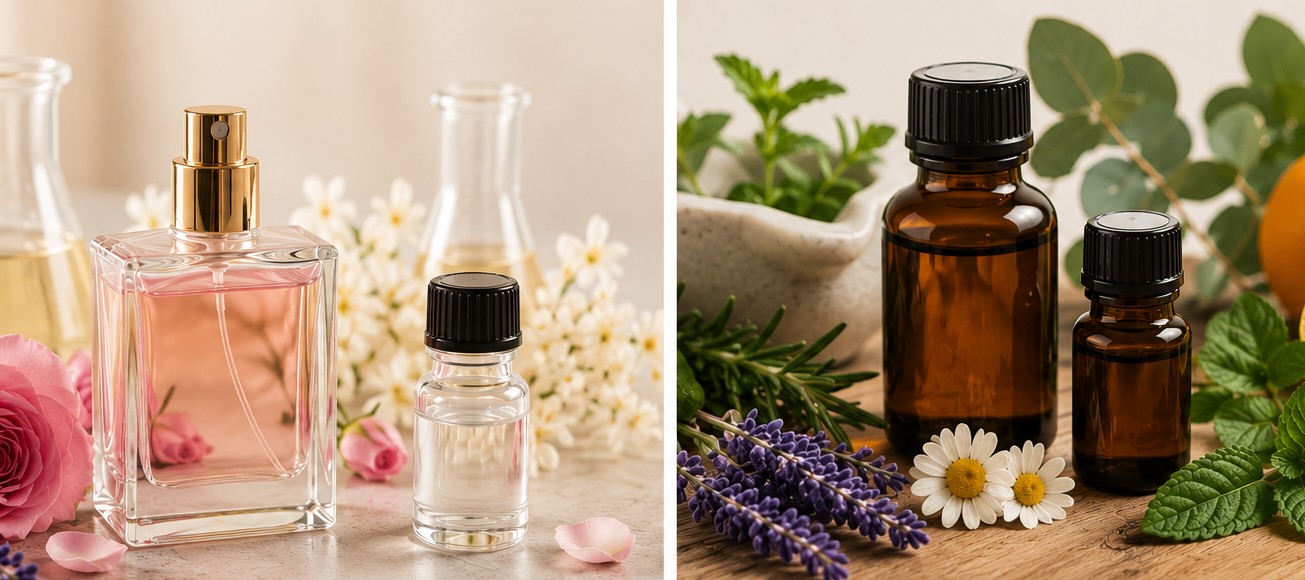
If you’re new to perfume making, candle making, soap making, or cosmetics, you’ve probably come across the terms Fragrance Oils and Essential Oils. Although both are used to add pleasant scents, they are quite different in terms of composition, manufacturing process, performance, and applications.
Understanding these differences will help you choose the right ingredient for your products and create high-quality formulations.
🧪 What Are Fragrance Oils?
Fragrance oils are specially formulated aromatic blends created using natural isolates, synthetic aroma chemicals, or a combination of both. They are designed to provide consistent scent, excellent stability, and long-lasting performance across various applications.
✨ Key Features
- ✔ Long-lasting fragrance
- ✔ Wide variety of scents
- ✔ Excellent stability
- ✔ Consistent quality
- ✔ Suitable for many cosmetic and home fragrance products
Popular fragrance oil categories include:
- 🌸 Floral
- 🍊 Fruity
- 🌲 Woody
- 🍫 Gourmand
- 🌊 Fresh
- 🍦 Vanilla
- 🍃 Herbal
- 🧴 Luxury perfume-inspired fragrances
🌱 What Are Essential Oils?
Essential oils are concentrated aromatic extracts obtained directly from plants. They are commonly produced through steam distillation, cold pressing, or other extraction methods, depending on the plant source.
Examples include:
- 🌹 Rose Essential Oil
- 🌿 Lavender Essential Oil
- 🍋 Lemon Essential Oil
- 🌱 Peppermint Essential Oil
- 🌳 Sandalwood Essential Oil
- 🌼 Chamomile Essential Oil
- 🌿 Rosemary Essential Oil
- 🌾 Eucalyptus Essential Oil
Each essential oil contains naturally occurring aromatic compounds that contribute to its unique scent profile.
⚖️ Fragrance Oils vs Essential Oils
| Feature | Fragrance Oils | Essential Oils |
|---|---|---|
| Source | Natural isolates, synthetic aroma chemicals, or blends | Directly extracted from plants |
| Aroma Variety | Thousands of fragrance options | Limited to naturally occurring plant aromas |
| Consistency | Highly consistent between batches | Can vary based on harvest and origin |
| Longevity | Usually longer lasting | Often lighter and may fade more quickly |
| Cost | Generally more economical | Often more expensive, especially rare oils |
| Stability | High stability in many formulations | Stability varies by oil and application |
| Best For | Perfumes, candles, soaps, cosmetics, diffusers | Aromatherapy, natural cosmetics, massage oils, wellness products |
🌸 Advantages of Fragrance Oils
- 💎 Strong scent throw
- ⏳ Long-lasting fragrance
- 🎨 Thousands of unique scent profiles
- 💰 Cost-effective formulations
- 🧴 Excellent compatibility with soaps and candles
- 🌡 Better stability in many finished products
🌿 Advantages of Essential Oils
- 🌱 Plant-derived aroma
- 🌸 Distinct natural scent profiles
- 🧴 Suitable for many natural cosmetic formulations
- 🪔 Commonly used in aromatherapy and wellness products
🧪 Which Is Better for Perfume Making?
For commercial perfumes, many perfumers combine fragrance oils, essential oils, and aroma chemicals to create balanced formulations with excellent longevity and performance.
🌿 Essential Oils Are Best When You Want
- Natural botanical aromas
- Plant-derived ingredients
- Traditional fragrance profiles
🌸 Fragrance Oils Are Best When You Want
- Long-lasting scent
- Wide fragrance selection
- Consistent performance
- Affordable production
Many successful perfumes use a blend of different fragrance materials to achieve complexity and durability.
🕯 Which Is Better for Candle Making?
Fragrance oils are commonly chosen for candles because they perform well in wax, offer strong hot and cold scent throw, and are available in many creative fragrance profiles.
Some essential oils can also be used in candles, but performance varies depending on the oil and wax type.
🧼 Which Is Better for Soap Making?
Both fragrance oils and essential oils can be used in soap making.
Fragrance Oils
- More fragrance choices
- Strong scent retention
- Consistent batches
Essential Oils
- Natural botanical aroma
- Popular for handmade and herbal soaps
💰 Cost Comparison
Fragrance Oils
- Lower cost
- Large variety
- Ideal for commercial-scale production
Essential Oils
- Higher cost
- Price depends on plant source and extraction method
- Rare oils such as rose and sandalwood can be significantly more expensive
🛒 Where to Buy Fragrance Oils and Essential Oils in India?
If you’re looking for reliable perfume-making and cosmetic raw materials, Sarochem offers fragrance oils, essential oils, aroma chemicals, perfumers alcohol, DPG, reed diffuser supplies, bottles, and packaging materials.
💡 Tips for Beginners
- 🧪 Test small batches before large production.
- 📒 Keep records of every formula.
- ⚖️ Measure ingredients accurately.
- 🌡 Store oils in cool, dry conditions away from sunlight.
- 🧴 Use high-quality raw materials from trusted suppliers.
- 🕒 Allow perfume blends to mature before evaluating the final scent.
❓ Frequently Asked Questions
Can fragrance oils be used in perfumes?
Yes. Many fragrance oils are formulated specifically for use in perfumes and personal care products. Always select materials intended for cosmetic applications.
Are essential oils better than fragrance oils?
Neither is universally better. The best choice depends on your product goals, desired scent profile, formulation, budget, and target market.
Can I mix fragrance oils and essential oils?
Yes. Many professional perfumers combine them with aroma chemicals to create more complex and long-lasting fragrances. Ensure compatibility and follow appropriate formulation practices.
Which lasts longer?
In many applications, fragrance oils generally provide longer-lasting scent performance than essential oils, although the exact result depends on the formulation and ingredients used.
Final Thoughts
Both fragrance oils and essential oils play valuable roles in modern fragrance and cosmetic formulation. Essential oils provide authentic botanical aromas, while fragrance oils offer versatility, consistency, and an extensive range of scent profiles.
Whether you’re creating perfumes, candles, soaps, reed diffusers, or home fragrance products, choosing high-quality ingredients from a trusted supplier can help you achieve better results and deliver products your customers will love.
