
Blog
How to Make Bath Salts Using Epsom Salt
Jul
How to Make Bath Salts Using Epsom Salt: A Complete DIY Guide
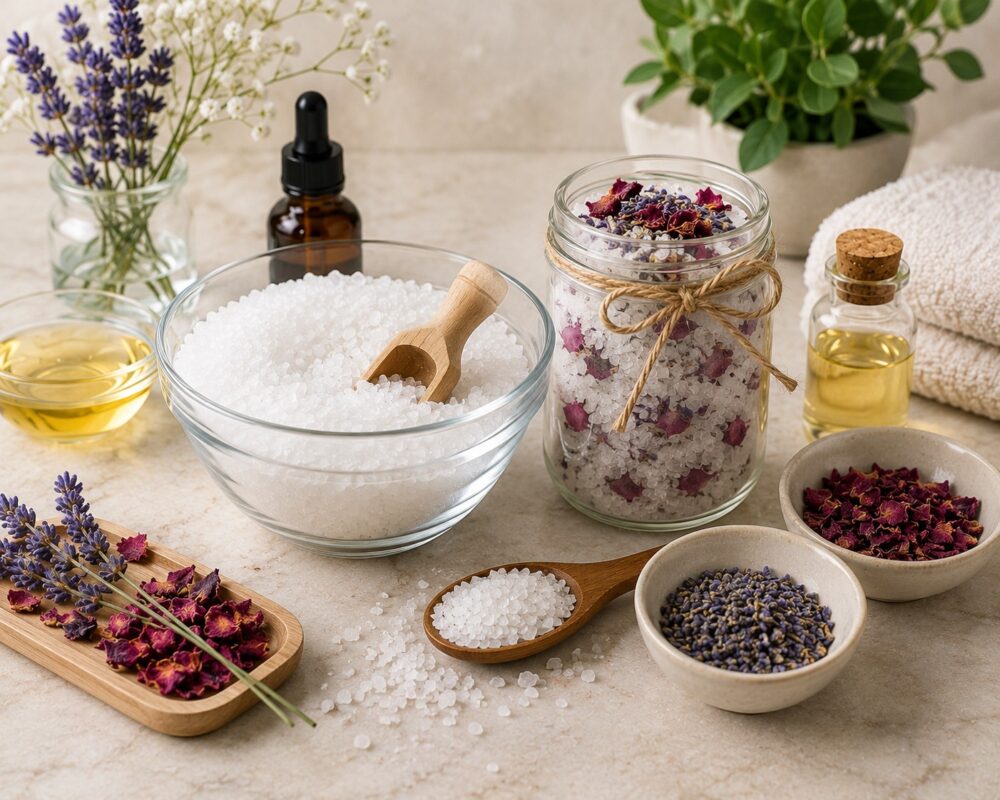
Bath salts are one of the easiest and most rewarding DIY personal care products you can make at home. They combine mineral-rich salts, beautiful fragrances, botanical ingredients, and natural colors to create a relaxing bath experience that feels luxurious and spa-like.
Among all bath salt ingredients, Epsom Salt is one of the most popular because of its crystal appearance, ease of use, and versatility. Whether you’re making bath salts for personal use, gifting, or starting your own bath and body business, Epsom salt is an excellent base ingredient.
This guide covers everything beginners need to know about making bath salts using Epsom salt, including ingredients, equipment, fragrance selection, colorants, packaging ideas, safety tips, and common mistakes to avoid.
What Is Epsom Salt?
Epsom Salt is a naturally occurring mineral compound known as Magnesium Sulfate. Unlike table salt, it is composed of magnesium, sulfur, and oxygen rather than sodium chloride.
Its attractive crystal appearance and ease of blending make it one of the most commonly used ingredients in decorative bath salts and spa products.
Why Use Epsom Salt in Bath Salts?
Epsom Salt is widely used because it:
- Creates beautiful crystal bath salts
- Blends easily with fragrances
- Mixes well with botanical ingredients
- Accepts cosmetic colorants effectively
- Provides a premium spa-like appearance
- Is suitable for many DIY bath recipes
Its versatility makes it a favorite among beginners and professional makers alike.
Ingredients You’ll Need
Essential Ingredients
- Epsom Salt
- Fragrance Oil or Essential Oil
- Cosmetic Colorant, optional
- Dried Botanicals, optional
Optional Ingredients
- Himalayan Pink Salt
- Dead Sea Salt
- Sea Salt
- Baking Soda
- Carrier Oil, small amount if desired
- Mica Powder, bath-safe
- Dried Rose Petals
- Lavender Buds
- Calendula Petals
- Chamomile Flowers
Equipment You’ll Need
Prepare the following:
- Digital Scale
- Mixing Bowl
- Measuring Spoons
- Stainless Steel Spoon or Silicone Spatula
- Gloves
- Glass Jars or Stand-Up Pouches
- Labels
Using clean equipment helps maintain product quality.
Choosing the Right Fragrance
Bath salts can be scented using either fragrance oils or essential oils suitable for bath products.
Floral Fragrances
- Rose
- Lavender
- Jasmine
- Lily
- Gardenia
Citrus Fragrances
- Lemon
- Sweet Orange
- Grapefruit
- Bergamot
Fresh Fragrances
- Ocean Breeze
- Fresh Linen
- Green Tea
- Cotton
Woody Fragrances
- Sandalwood
- Cedarwood
- Patchouli
- Oud
Sweet Fragrances
- Vanilla
- Chocolate
- Coffee
- Honey
Choose fragrance oils specifically intended for cosmetic or bath product use.
Basic Bath Salt Formula
A beginner-friendly recipe:
- 95–98% Epsom Salt
- 2–5% Fragrance or Essential Oil
- Optional Cosmetic Colorant
- Optional Botanicals
Example 500 g Batch
- 485 g Epsom Salt
- 15 g Fragrance Oil
- Cosmetic Color, optional
- Dried Flowers, optional
Always follow your fragrance supplier’s recommended usage levels.
Step-by-Step Instructions
Step 1: Prepare Your Workspace
Work on a clean, dry surface and gather all ingredients before beginning.
Step 2: Measure the Epsom Salt
Weigh the desired amount of Epsom Salt using a digital scale.
Step 3: Add Fragrance
Slowly add the fragrance or essential oil while gently mixing to distribute it evenly throughout the salt.
Step 4: Add Color
If using a cosmetic colorant, add a small amount and mix thoroughly until evenly dispersed. Avoid using excessive color to prevent staining.
Step 5: Add Botanicals
Fold in dried flowers or herbs gently to avoid crushing delicate petals.
Popular additions include:
- Rose Petals
- Lavender Buds
- Calendula
- Chamomile
Step 6: Package the Bath Salts
Transfer the finished bath salts into clean, dry containers such as:
- Glass Jars
- PET Jars
- Stand-Up Pouches
- Kraft Paper Bags
- Decorative Gift Tubes
Seal immediately to preserve fragrance.
Popular Bath Salt Fragrance Blends
Relaxing Spa Blend
- Lavender
- Chamomile
- Sandalwood
Fresh Citrus Blend
- Lemon
- Sweet Orange
- Bergamot
Floral Garden Blend
- Rose
- Jasmine
- Lavender
Luxury Blend
- White Musk
- Amber
- Sandalwood
Refreshing Blend
- Peppermint
- Eucalyptus
- Rosemary
Decorative Additives
Many makers enhance the appearance of bath salts using:
- Rose Petals
- Lavender Buds
- Calendula Flowers
- Blue Cornflower Petals
- Chamomile Flowers
- Dried Orange Peel
Use only cosmetic-appropriate botanical ingredients.
Packaging Ideas
Professional packaging enhances product appeal.
Popular options include:
- Clear PET Jars
- Glass Apothecary Jars
- Matte Stand-Up Pouches
- Kraft Paper Pouches
- Gift Boxes
- Mason Jars
Include attractive labels with product information and directions for use.
Storage Guidelines
Store bath salts:
- In airtight containers
- Away from moisture
- Away from direct sunlight
- In a cool, dry place
- Away from excessive heat
Proper storage helps maintain fragrance and appearance.
Tips for Better Bath Salts
For the best results:
- Use cosmetic-grade ingredients.
- Measure accurately.
- Mix gently.
- Add fragrance gradually.
- Store immediately after mixing.
- Test small batches before large production.
Common Mistakes to Avoid
Avoid these beginner mistakes:
- Adding too much fragrance
- Using damp ingredients
- Overmixing botanicals
- Using non-cosmetic colorants
- Storing in humid conditions
- Packaging before testing fragrance strength
Careful preparation leads to more consistent products.
Safety Tips
Always follow safe manufacturing practices:
- Wear gloves while mixing.
- Use cosmetic-grade ingredients.
- Keep products away from children and pets.
- Label finished products clearly.
- Avoid contamination during production.
- Follow supplier recommendations for fragrance usage.
Always consult the Safety Data Sheet (SDS) for the ingredients you use.
Frequently Asked Questions
Can I use only Epsom Salt?
Yes. Many DIY bath salt recipes use Epsom Salt as the primary ingredient, while others blend it with sea salt or Himalayan salt for visual appeal and texture.
Can I use fragrance oils?
Yes. Use fragrance oils specifically designed for bath and body products and follow the supplier’s recommended usage levels.
Can I add dried flowers?
Yes. Decorative botanicals such as rose petals, lavender buds, and calendula petals are commonly used to enhance the appearance of bath salts.
How long do homemade bath salts last?
Shelf life depends on the ingredients, fragrance, packaging, and storage conditions. Keeping bath salts in airtight containers away from moisture helps maintain their quality.
Can I sell homemade bath salts?
Yes. If you plan to sell bath salts, ensure you comply with local cosmetic regulations, use cosmetic-grade ingredients, label products accurately, and conduct appropriate quality and stability testing.
Final Thoughts
Making bath salts with Epsom Salt is a simple and enjoyable DIY project that combines creativity with premium self-care. By using high-quality Epsom Salt, carefully selected fragrance or essential oils, decorative botanicals, and attractive packaging, you can create beautiful bath products for personal use, thoughtful gifts, or a successful bath and body business.
Start with small batches, experiment with different fragrance combinations, keep detailed formulation notes, and refine your recipes over time. With quality ingredients and careful craftsmanship, you can produce luxurious bath salts that offer a relaxing, spa-inspired experience and delight your customers.
