
Blog
How to Start a Cosmetic Raw Material Business in India
Jul
How to Start a Cosmetic Raw Material Business in India: A Complete Beginner's Guide
How to Start a Cosmetic Raw Material Business in India: A Complete Beginner's Guide
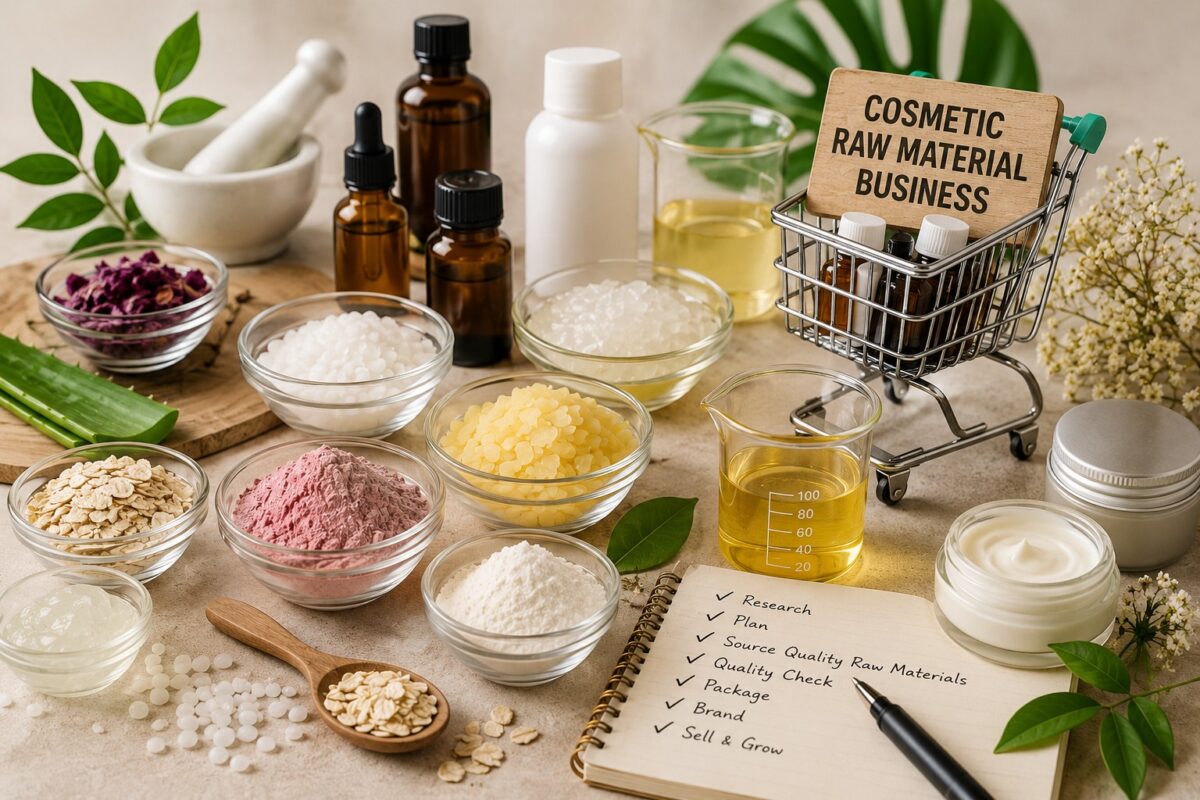
India's cosmetics and personal care industry has experienced remarkable growth over the past decade. The increasing popularity of skincare, handmade soaps, candles, perfumes, hair care products, and DIY beauty formulations has created strong demand for cosmetic raw materials. From small home-based entrepreneurs to large cosmetic manufacturers, businesses across the country require reliable suppliers of high-quality ingredients.
Starting a cosmetic raw material business can be an excellent opportunity for entrepreneurs looking to enter a growing market with scalable potential. Whether you plan to sell carrier oils, essential oils, fragrance oils, cosmetic chemicals, clays, herbal powders, soap-making ingredients, or packaging supplies, understanding the business fundamentals is essential.
This guide covers everything you need to know about starting a cosmetic raw material business in India, including business registration, sourcing, product selection, legal requirements, storage, marketing, and strategies for long-term success.
Why Start a Cosmetic Raw Material Business?
The demand for cosmetic ingredients continues to grow because of the expansion of:
- Handmade soap businesses
- Skincare brands
- Hair care manufacturers
- Perfume makers
- Candle makers
- Aromatherapy businesses
- Beauty startups
- Online DIY hobbyists
- Cosmetic contract manufacturers
With the right product range and reliable suppliers, a cosmetic raw material business can serve both retail and wholesale customers.
Understand the Market
Before investing, research your target customers.
Potential buyers include:
- Cosmetic manufacturers
- Handmade soap makers
- Candle makers
- Perfume formulators
- Spa and wellness businesses
- Beauty salons
- Ayurvedic product manufacturers
- Small home-based businesses
- E-commerce sellers
- Educational institutions
Understanding customer needs helps you select the right products.
Register Your Business
Choose a suitable business structure such as:
- Sole Proprietorship
- Partnership Firm
- LLP (Limited Liability Partnership)
- Private Limited Company
Obtain the necessary registrations based on your business model, which may include:
- GST Registration
- PAN
- Current Business Bank Account
- Shop & Establishment Registration (where applicable)
- Import Export Code (IEC) if importing materials
Consult a qualified professional to understand the registrations applicable to your business.
Decide Your Product Range
Start with products that have steady demand.
Popular cosmetic raw materials include:
Carrier Oils
- Sweet Almond Oil
- Coconut Oil
- Jojoba Oil
- Argan Oil
- Grapeseed Oil
- Avocado Oil
- Castor Oil
Essential Oils
- Lavender
- Tea Tree
- Rosemary
- Lemon
- Peppermint
- Eucalyptus
- Cedarwood
Fragrance Oils
- Rose
- Sandalwood
- White Musk
- Vanilla
- Coffee
- Ocean Breeze
- Jasmine
- Peony Blossom
Soap Making Ingredients
- Sodium Hydroxide (Caustic Soda)
- Potassium Hydroxide
- Melt and Pour Soap Base
- Stearic Acid
- Glycerin
- Sodium Lactate
Cosmetic Chemicals
- Propylene Glycol
- Polysorbate 20
- Polysorbate 80
- Cetyl Alcohol
- Emulsifying Wax
- Glycolic Acid
- Hyaluronic Acid
- Niacinamide
Cosmetic Clays
- Kaolin Clay
- Bentonite Clay
- French Green Clay
- Rhassoul Clay
- Pink Clay
Herbal Powders
- Aloe Vera Powder
- Neem Powder
- Hibiscus Powder
- Rose Petal Powder
- Multani Mitti
- Shikakai Powder
- Amla Powder
Candle Making Supplies
- Soy Wax
- Paraffin Wax
- Beeswax
- Coconut Wax
- Candle Wicks
- Candle Dyes
- Fragrance Oils
- Silicone Molds
Packaging Materials
- Glass Bottles
- PET Bottles
- Roll-On Bottles
- Dropper Bottles
- Cream Jars
- Pump Bottles
- Aluminum Bottles
- Labels
Offering a wide range of products increases customer retention.
Source Reliable Suppliers
Your business depends on consistent quality.
Source from:
- Indian manufacturers
- Authorized distributors
- Bulk importers
- International suppliers
- Trade fairs
- B2B marketplaces
Always request:
- Product specifications
- COA (Certificate of Analysis)
- SDS/MSDS
- Batch information
- Sample quantities
Evaluate suppliers based on quality, consistency, pricing, and delivery performance.
Importing Cosmetic Raw Materials
If importing products:
- Obtain an Import Export Code (IEC).
- Verify applicable customs duties.
- Check HS Codes.
- Ensure compliance with Indian regulations.
- Work with experienced freight forwarders and customs brokers.
Careful planning helps reduce delays and unexpected costs.
Storage Requirements
Store raw materials properly to maintain quality.
General guidelines include:
- Keep containers tightly sealed.
- Store in a cool, dry place.
- Protect from direct sunlight.
- Separate incompatible chemicals.
- Clearly label all products.
- Maintain clean storage areas.
- Follow supplier storage recommendations.
Good inventory management minimizes waste.
Packaging and Repacking
Many businesses buy in bulk and repack into smaller sizes.
Popular retail pack sizes include:
- 30 ml
- 50 ml
- 100 ml
- 250 ml
- 500 ml
- 1 Litre
- 5 Kg
- 25 Kg
Use compatible packaging materials and accurate weighing equipment.
Branding Your Business
A professional brand helps build trust.
Create:
- Brand name
- Logo
- Product labels
- Website
- Product catalog
- Business cards
- Social media pages
Consistent branding improves recognition and customer confidence.
Selling Online
An e-commerce website allows you to reach customers across India.
Popular sales channels include:
- Your own website
- Online marketplaces
- Social media platforms
- B2B marketplaces
Optimize product pages with:
- SEO-friendly titles
- Detailed descriptions
- Technical specifications
- Safety information
- Usage guidelines
- FAQs
- High-quality product images
Marketing Your Business
Promote your products through:
- Educational blogs
- YouTube tutorials
- DIY formulation guides
- Social media content
- Email marketing
- Trade exhibitions
- Workshops
- WhatsApp Business
Providing valuable educational content helps establish your expertise.
Customer Support
Offer excellent customer service by providing:
- Product guidance
- Technical support
- Formulation advice (within your expertise)
- Fast shipping
- Prompt communication
- Transparent return policies
Satisfied customers are more likely to place repeat orders.
Quality Control
Implement quality checks by:
- Inspecting incoming materials
- Recording batch numbers
- Maintaining inventory records
- Performing visual inspections
- Retaining supplier documentation
- Using clean packaging practices
Consistent quality strengthens your reputation.
Investment Required
The required investment depends on the scale of your business.
Approximate starting ranges:
| Business Size | Estimated Investment |
|---|---|
| Home-based | ₹1–3 Lakhs |
| Small Retail & Online | ₹3–10 Lakhs |
| Wholesale Distribution | ₹10–50 Lakhs |
| Large Distribution | ₹50 Lakhs+ |
Costs typically include inventory, packaging, storage, branding, website development, and marketing.
Common Challenges
New businesses often face:
- Choosing reliable suppliers
- Managing inventory
- Maintaining product quality
- Price competition
- Regulatory compliance
- Customer education
- Shipping fragile packaging
Planning ahead helps reduce these risks.
Tips for Success
To build a successful cosmetic raw material business:
- Start with fast-moving products.
- Focus on quality over quantity.
- Build relationships with suppliers.
- Offer small and bulk pack sizes.
- Keep detailed inventory records.
- Invest in professional packaging.
- Publish educational content regularly.
- Listen to customer feedback.
- Expand your product range gradually.
Consistency and trust are key to long-term growth.
Frequently Asked Questions
Is the cosmetic raw material business profitable?
Yes. Demand for cosmetic ingredients continues to grow with the expansion of skincare, personal care, handmade cosmetics, and fragrance industries. Profitability depends on product selection, pricing, sourcing, and customer service.
Can I start from home?
Yes. Many entrepreneurs begin from home with a limited product range and expand as demand increases. Ensure your storage conditions are suitable for the materials you handle.
Which products sell the most?
Popular products include essential oils, fragrance oils, carrier oils, melt-and-pour soap bases, cosmetic clays, herbal powders, emulsifiers, surfactants, packaging bottles, and candle-making supplies.
Do I need to manufacture products?
No. Many successful businesses operate as distributors or resellers by sourcing products from manufacturers and repacking them into smaller retail sizes.
How do I attract customers?
Build a professional website, optimize your product pages for search engines, publish educational blogs, engage on social media, and provide excellent customer support.
Final Thoughts
Starting a cosmetic raw material business in India offers an exciting opportunity to serve one of the fastest-growing sectors in the beauty and personal care industry. With increasing demand for skincare, soaps, perfumes, candles, and DIY cosmetics, businesses that focus on quality products, reliable sourcing, and excellent customer service can build a loyal customer base and achieve sustainable growth.
Begin with a carefully selected range of high-demand products, invest in professional branding and packaging, educate your customers through valuable content, and continuously improve your operations. By maintaining high standards and adapting to market trends, you can establish a successful cosmetic raw material business that grows alongside India's expanding beauty industry.
