
Blog
How to Make Room Spray Using Fragrance Oils
Jul
How to Make Room Spray Using Fragrance Oils: A Complete DIY Guide
A beautifully scented room can instantly transform the atmosphere of your home, office, or workspace. Room sprays are one of the quickest and most effective ways to freshen indoor spaces, eliminate stale odors, and create a welcoming environment. Unlike candles or reed diffusers, room sprays provide an immediate burst of fragrance whenever you need it.
The best part is that making your own room spray at home is simple, affordable, and highly customizable. Whether you prefer floral, citrus, woody, fruity, or luxury-inspired fragrances, you can create a room spray that perfectly suits your style.
This guide explains everything beginners need to know about making room sprays using fragrance oils, including ingredients, mixing ratios, equipment, safety tips, and popular fragrance blends.
What Is a Room Spray?
A room spray is a liquid air freshener designed to disperse fragrance throughout a room using a fine mist spray bottle. It typically contains fragrance oils, a suitable solvent or perfume base, distilled water in water-based formulas, and sometimes a solubilizer or preservative depending on the formulation.
Room sprays are commonly used in:
- Living rooms
- Bedrooms
- Bathrooms
- Offices
- Hotels
- Retail stores
- Yoga studios
- Meditation spaces
- Cars with suitable formulations
Unlike reed diffusers, room sprays provide instant fragrance whenever needed.
Benefits of DIY Room Sprays
Making your own room spray offers several advantages:
- Easy to prepare
- Affordable
- Custom fragrance combinations
- Quick home freshening
- Suitable for gifts
- Great for small businesses
- Adjustable fragrance strength
- Decorative packaging options
Ingredients You’ll Need
A basic room spray typically requires:
Essential Ingredients
- Fragrance Oil
- Perfumer’s Alcohol or suitable room spray base
- Distilled Water, if applicable
- Solubilizer, if required by the formulation
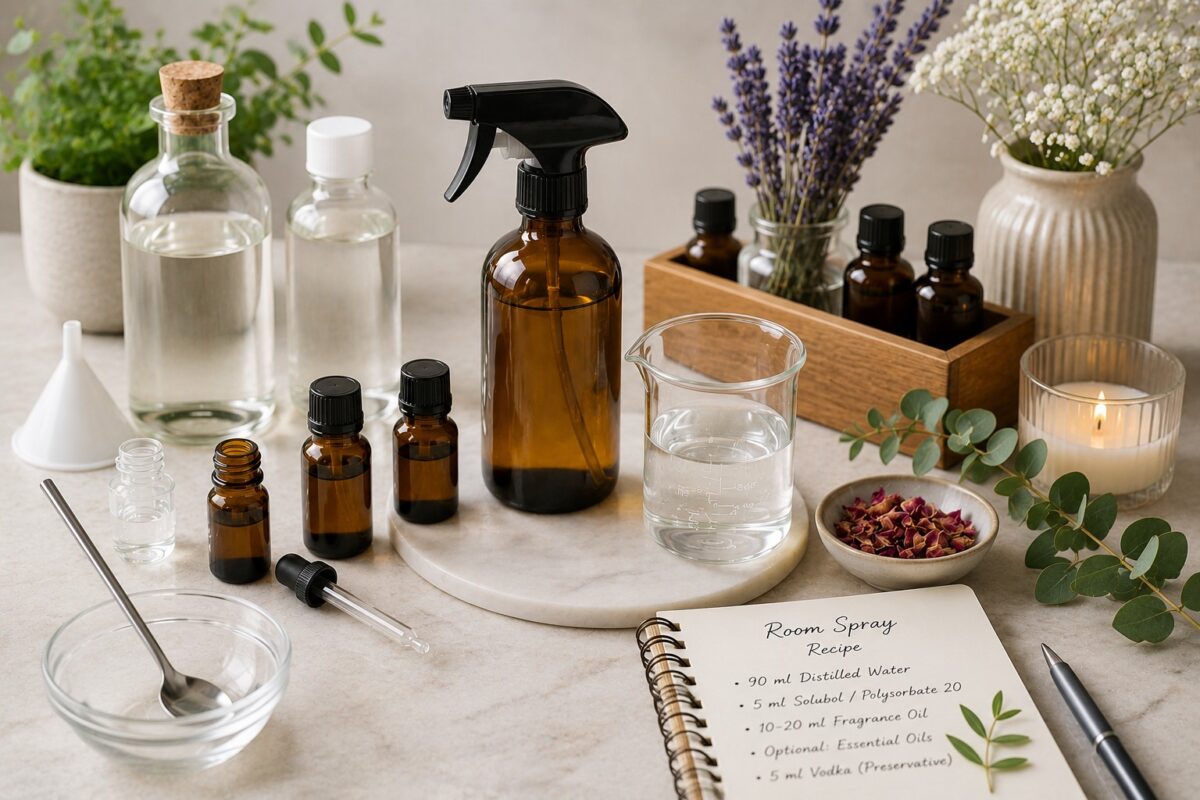
- Fine Mist Spray Bottle
Equipment
- Digital Scale or Measuring Cylinder
- Glass Beaker
- Funnel
- Stirring Rod
- Pipettes
- Labels
- Gloves
Using clean equipment helps ensure consistent results.
Choosing the Right Fragrance Oil
Select fragrance oils specifically designed for home fragrance applications.
Popular fragrance categories include:
Floral
- Rose
- Jasmine
- Lavender
- Lily
- Gardenia
Fresh
- Ocean Breeze
- Fresh Linen
- Green Tea
- Cotton
- Rain
Citrus
- Lemon
- Orange
- Grapefruit
- Bergamot
Woody
- Sandalwood
- Cedarwood
- Oud
- Patchouli
Sweet
- Vanilla
- Coffee
- Chocolate
- Caramel
Basic Room Spray Formula
A beginner-friendly alcohol-based formula:
- 10–20% Fragrance Oil
- 75–90% Perfumer’s Alcohol or Room Spray Base
- Optional Distilled Water, depending on the formulation
Example 100 ml
- 15 ml Fragrance Oil
- 85 ml Room Spray Base
Always follow your fragrance supplier’s recommended usage levels.
Water-Based Room Sprays
If creating a water-based room spray, a suitable solubilizer is often needed to help disperse the fragrance oil evenly. Depending on the formulation, a preservative may also be required because water-based products can support microbial growth.
Always use tested cosmetic or home-fragrance formulations and follow supplier recommendations.
Step-by-Step Instructions
Step 1: Prepare Your Workspace
Clean all equipment thoroughly and work in a well-ventilated area.
Step 2: Measure the Fragrance Oil
Accurately weigh or measure the required amount of fragrance oil.
Step 3: Add the Base
Slowly combine the fragrance oil with your room spray base. Mix gently until uniform.
Step 4: Add Water If Applicable
If your formulation includes distilled water, add it gradually while stirring continuously.
Step 5: Fill the Bottle
Use a funnel to pour the finished mixture into a clean spray bottle. Leave a small air gap at the top.
Step 6: Shake Gently
Shake lightly before first use. Some formulations may benefit from resting for 24–48 hours before evaluation.
Popular Room Spray Fragrance Blends
Relaxing Blend
- Lavender
- Chamomile
- Sandalwood
Perfect for bedrooms and meditation spaces.
Fresh Home Blend
- Lemon
- Green Tea
- Fresh Linen
Ideal for everyday home use.
Luxury Hotel Blend
- White Musk
- Sandalwood
- Amber
Creates an elegant and premium atmosphere.
Floral Garden Blend
- Rose
- Jasmine
- Lily
Perfect for living rooms and guest areas.
Citrus Energy Blend
- Lemon
- Bergamot
- Sweet Orange
Excellent for kitchens and offices.
Choosing the Right Spray Bottle
Quality packaging improves both performance and appearance.
Popular sizes include:
- 50 ml
- 100 ml
- 200 ml
- 250 ml
- 500 ml
Amber, frosted, matte black, and clear PET bottles are commonly used for room sprays.
Tips for Better Fragrance Performance
To get the best results:
- Use high-quality fragrance oils.
- Measure ingredients accurately.
- Test small batches first.
- Store away from direct sunlight.
- Shake if recommended by your formulation.
- Keep bottles tightly closed.
Common Mistakes to Avoid
Avoid these beginner mistakes:
- Using fragrance oils not intended for room sprays.
- Guessing ingredient quantities.
- Skipping compatibility testing.
- Using poor-quality spray pumps.
- Scaling up before testing.
- Ignoring supplier recommendations.
Proper testing leads to more reliable products.
Safety Tips
Always follow safe manufacturing practices:
- Work in a well-ventilated area.
- Wear gloves when handling concentrated fragrance oils.
- Avoid contact with eyes.
- Keep away from children and pets.
- Store away from heat and flames.
- Label all finished products clearly.
Always consult the Safety Data Sheet (SDS) for the ingredients you use.
Frequently Asked Questions
Can I use essential oils instead of fragrance oils?
Yes. Essential oils can be used in suitable room spray formulations, although they may perform differently from fragrance oils and often require a compatible solubilizer.
Why does my room spray separate?
Separation usually occurs when fragrance oil is not compatible with the base or when a suitable solubilizer has not been used in water-based formulations.
How long does a homemade room spray last?
Shelf life depends on the formulation, packaging, storage conditions, and whether the product contains water. Follow the recommendations for your specific ingredients.
Which bottle works best?
A high-quality fine mist spray bottle provides even fragrance distribution and improves the user experience.
Can I sell homemade room sprays?
Yes, provided you comply with local regulations, use suitable ingredients, label products accurately, and perform appropriate stability and safety testing before selling.
Final Thoughts
Making room sprays with fragrance oils is an enjoyable DIY project that combines creativity with practical home fragrance. By selecting high-quality fragrance oils, using a suitable room spray base, measuring ingredients accurately, and following good manufacturing practices, you can create beautiful room sprays that instantly refresh any space.
Whether you’re making room sprays for personal use, gifts, or a growing home fragrance business, start with small batches, keep detailed formulation notes, and experiment with different fragrance combinations. With time and practice, you’ll develop signature room spray blends that leave a lasting impression and fill every room with freshness and elegance.
