
Blog
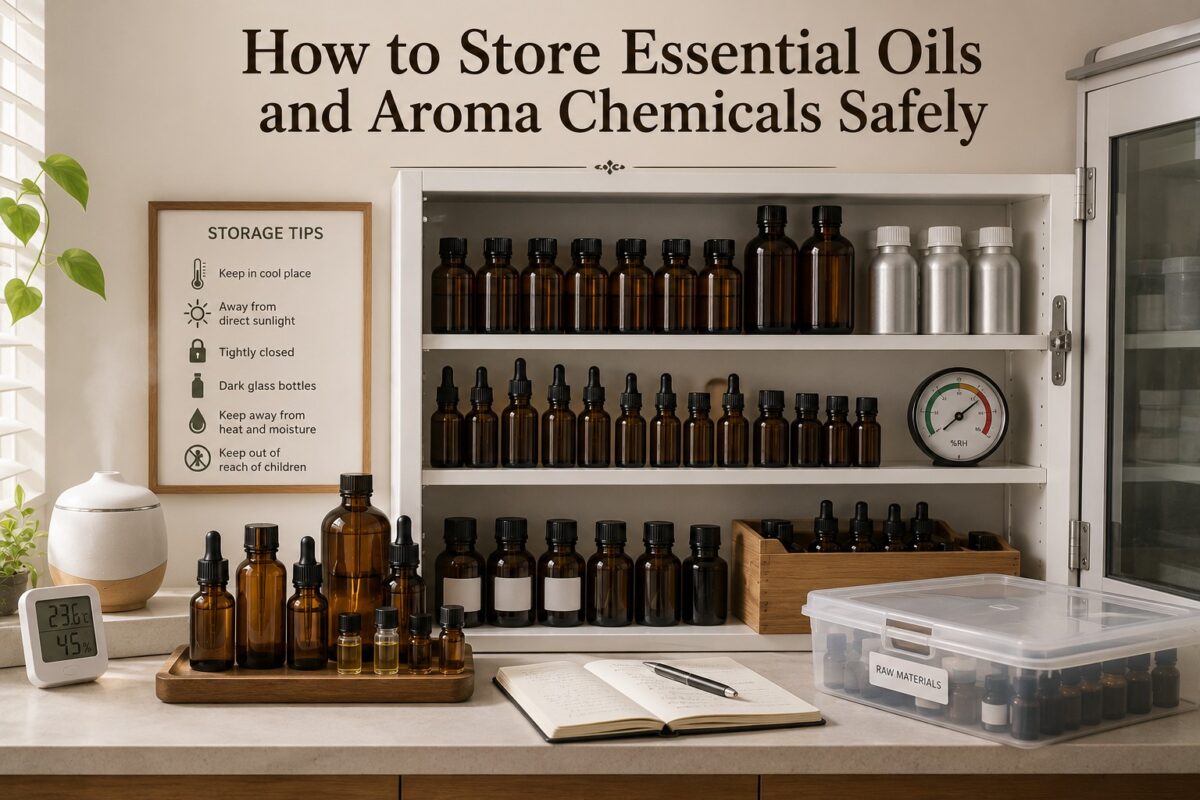
How to Store Essential Oils and Aroma Chemicals Safely
Jul
How to Store Essential Oils and Aroma Chemicals Safely: A Complete Guide
Whether you’re a hobbyist making perfumes at home or a professional formulating cosmetics and fragrances, proper storage of essential oils and aroma chemicals is essential for maintaining product quality, stability, and safety. These valuable raw materials can lose their fragrance, oxidize, discolor, or degrade if exposed to heat, sunlight, air, or moisture for extended periods.
By following proper storage practices, you can extend the shelf life of your ingredients, preserve their aroma profiles, reduce waste, and ensure consistent results in your formulations.
This guide explains everything you need to know about safely storing essential oils and aroma chemicals, including ideal storage conditions, recommended containers, labeling methods, safety precautions, and common mistakes to avoid.
Why Proper Storage Matters
Essential oils and aroma chemicals are sensitive to environmental conditions.
Poor storage may lead to:
- Oxidation
- Loss of fragrance strength
- Color changes
- Increased viscosity
- Ingredient contamination
- Reduced formulation performance
- Shorter shelf life
Proper storage helps maintain the quality and consistency of your raw materials.
What Are Essential Oils?
Essential oils are concentrated aromatic extracts obtained from plants through processes such as steam distillation or cold pressing.
Common examples include:
- Lavender Essential Oil
- Lemon Essential Oil
- Peppermint Essential Oil
- Tea Tree Essential Oil
- Rosemary Essential Oil
- Cedarwood Essential Oil
- Frankincense Essential Oil
- Eucalyptus Essential Oil
Because they contain naturally occurring volatile compounds, they require careful storage.
What Are Aroma Chemicals?
Aroma chemicals are individual fragrance molecules used in modern perfumery and home fragrance products.
Popular examples include:
- Iso E Super
- Ambroxan
- Hedione
- Galaxolide
- Cashmeran
- Coumarin
- Vanillin
- Ethyl Maltol
- Benzyl Salicylate
- Linalool
Many aroma chemicals are highly stable, but proper storage still helps preserve their quality.
Best Storage Containers
Choosing the right container is one of the most important factors in preserving fragrance quality.
Amber Glass Bottles
Amber glass protects ingredients from ultraviolet (UV) light.
Best For
- Essential Oils
- Carrier Oils
- Botanical Extracts
Benefits
- Blocks harmful UV rays
- Chemically resistant
- Reusable
- Long-lasting
Cobalt Blue Glass Bottles
Popular for premium aromatherapy products.
Best For
- Essential Oils
- Massage Oils
- Luxury Fragrance Ingredients
Aluminum Bottles
Aluminum provides excellent protection from light and air.
Best For
- Bulk Essential Oils
- Aroma Chemicals
- Fragrance Concentrates
Benefits
- Lightweight
- Durable
- Excellent light protection
HDPE Containers
High-density polyethylene (HDPE) containers are commonly used for larger quantities of fragrance raw materials.
Suitable for:
- Bulk fragrance oils
- Cosmetic raw materials
- Industrial storage
Always ensure the container is compatible with the ingredient being stored.
Ideal Storage Temperature
Most essential oils and aroma chemicals should be stored in a cool, dry environment.
Recommended conditions:
- Temperature: 15–25°C
- Stable room temperature
- Away from heat sources
- Avoid frequent temperature fluctuations
Excessive heat may accelerate oxidation and reduce fragrance quality.
Protect from Sunlight
Direct sunlight is one of the biggest enemies of fragrance ingredients.
UV exposure can:
- Alter aroma profiles
- Cause discoloration
- Speed up oxidation
- Reduce shelf life
Store bottles inside cabinets, drawers, or dedicated storage boxes whenever possible.
Minimize Air Exposure
Oxygen contributes to oxidation.
To reduce exposure:
- Close caps immediately after use.
- Keep bottles tightly sealed.
- Avoid leaving containers open unnecessarily.
- Transfer bulk materials into smaller bottles as inventory decreases.
Less air inside the container generally helps maintain product quality.
Avoid Moisture
Moisture can contaminate fragrance materials and reduce their stability.
Store ingredients:
- In dry environments
- Away from sinks
- Away from humid bathrooms
- In tightly sealed containers
Never introduce water into essential oil or aroma chemical bottles unless required by a tested formulation.
Label Every Container
Proper labeling improves organization and safety.
Include:
- Product name
- INCI or chemical name
- Batch number
- Supplier
- Purchase date
- Opening date
- Expiry or retest date, if applicable
Clear labels help prevent formulation errors and simplify inventory management.
Organize by Category
Keeping materials organized makes formulation easier.
Suggested categories:
- Essential Oils
- Fragrance Oils
- Aroma Chemicals
- Carrier Oils
- Solvents
- Cosmetic Additives
Use separate shelves or storage boxes to reduce the risk of cross-contamination.
Storage Tips for Bulk Quantities
If you purchase ingredients in larger volumes:
- Store bulk containers unopened until needed.
- Decant working quantities into smaller bottles.
- Minimize repeated opening of bulk containers.
- Use clean funnels and equipment.
- Keep containers tightly closed after dispensing.
This approach helps preserve the quality of the remaining material.
Shelf Life Considerations
Shelf life varies depending on the ingredient.
Examples:
- Citrus essential oils often have shorter shelf lives due to oxidation.
- Woody and resinous oils generally remain stable for longer.
- Many aroma chemicals are highly stable when stored correctly.
Always follow your supplier’s recommended storage conditions and retest dates where applicable.
Safety Tips
Always follow good laboratory and manufacturing practices:
- Wear gloves when handling concentrated materials.
- Work in a well-ventilated area.
- Avoid direct eye contact.
- Keep ingredients away from children and pets.
- Store away from open flames and ignition sources.
- Clean spills immediately.
- Follow the Safety Data Sheet (SDS) for each ingredient.
Safety should always be a priority when working with fragrance materials.
Common Storage Mistakes to Avoid
Avoid these common mistakes:
- Storing bottles in direct sunlight
- Leaving caps loose
- Using unsuitable containers
- Allowing contamination during dispensing
- Forgetting to label bottles
- Keeping materials near heat sources
- Mixing different ingredients in the same container
- Ignoring supplier storage recommendations
Proper storage habits help reduce waste and maintain consistent product quality.
Tips for Beginners
If you’re new to perfume or cosmetic formulation:
- Buy small quantities initially.
- Store materials in amber glass bottles.
- Keep a simple inventory list.
- Label everything clearly.
- Work with clean equipment.
- Check ingredients regularly for changes in color, odor, or appearance.
Good organization makes formulation easier and more efficient.
Frequently Asked Questions
What is the best bottle for storing essential oils?
Amber glass bottles are widely recommended because they protect oils from UV light while offering excellent chemical resistance.
Should essential oils be refrigerated?
Most essential oils can be stored at cool room temperature. Some citrus oils may benefit from cooler storage, but always follow the supplier’s recommendations to avoid condensation issues.
How long do aroma chemicals last?
Shelf life depends on the specific material and storage conditions. Many aroma chemicals remain stable for several years when stored properly in tightly sealed containers away from heat and light.
Can I store essential oils in plastic bottles?
Some compatible HDPE containers are suitable for certain applications, but glass is generally preferred for long-term storage because of its superior chemical resistance.
Why do essential oils change color over time?
Changes in color can occur naturally as oils age or oxidize. Exposure to light, air, and heat can accelerate this process, which is why proper storage is important.
Final Thoughts
Proper storage is one of the simplest yet most effective ways to protect the quality of your essential oils and aroma chemicals. By using suitable containers, minimizing exposure to heat, light, air, and moisture, and following good labeling and inventory practices, you can extend the life of your ingredients and achieve more consistent results in perfumes, cosmetics, candles, soaps, and other fragrance products.
Whether you’re a DIY enthusiast or a professional formulator, investing in good storage habits today will help preserve your raw materials, reduce waste, and ensure every formulation delivers the quality and performance you expect.
