
Blog
What Are Aroma Chemicals in Perfume Making?
Jul
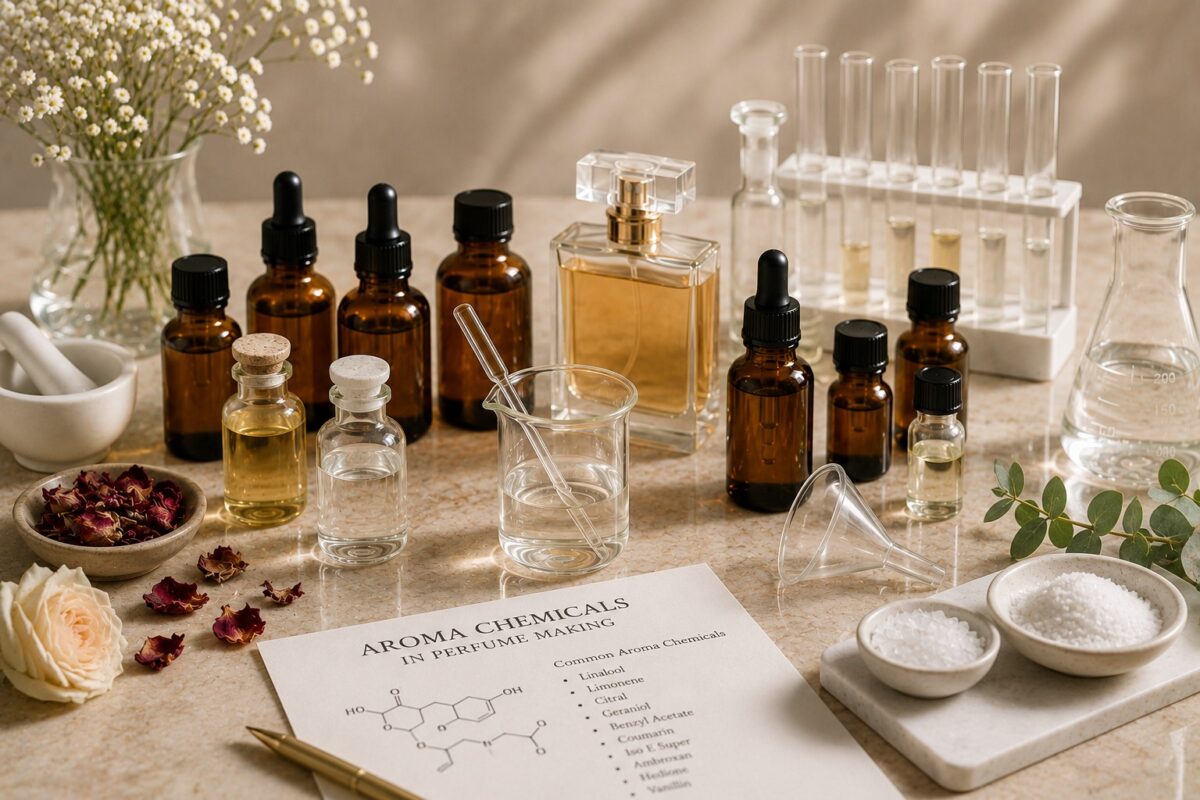
What Are Aroma Chemicals in Perfume Making? A Complete Beginner’s Guide
Perfume making is both an art and a science. While many people are familiar with natural ingredients like essential oils and botanical extracts, modern fragrances also rely on another important group of ingredients known as aroma chemicals.
These carefully developed fragrance molecules help perfumers create unique, consistent, and long-lasting scents that may not be possible using natural ingredients alone. From luxurious perfumes to scented candles, soaps, air fresheners, reed diffusers, and room sprays, aroma chemicals are widely used throughout the fragrance industry.
If you’re new to perfumery or interested in learning how fragrances are created, this guide will explain what aroma chemicals are, why they are used, their benefits, common examples, and how they compare to natural essential oils.
What Are Aroma Chemicals?
Aroma chemicals are individual fragrance molecules that produce a specific scent. They may be naturally isolated from plants or created through modern chemical synthesis to replicate or enhance natural aromas.
Unlike essential oils, which contain hundreds of naturally occurring compounds, an aroma chemical usually represents a single scent molecule with a distinct odor profile.
These ingredients allow perfumers to precisely control the character, strength, and longevity of a fragrance.
Why Are Aroma Chemicals Used?
Modern perfumery would be extremely limited without aroma chemicals.
They help perfumers:
- Create consistent fragrances
- Improve scent longevity
- Produce unique fragrance accords
- Recreate rare or unavailable natural aromas
- Reduce dependence on scarce natural resources
- Maintain consistent quality across batches
- Develop modern and innovative perfume styles
Many iconic perfumes rely on a combination of natural materials and aroma chemicals to achieve their signature scent.
Natural vs. Synthetic Aroma Chemicals
Aroma chemicals fall into two main categories.
Naturally Derived Aroma Chemicals
Some fragrance molecules are isolated directly from natural sources such as flowers, fruits, spices, woods, or herbs.
Examples include:
- Linalool
- Citral
- Eugenol
- Menthol
- Vanillin, which can also be synthesized
These molecules retain the same chemical structure regardless of their source.
Synthetic Aroma Chemicals
Synthetic aroma chemicals are produced in laboratories to create consistent, high-quality fragrance materials.
They often provide excellent stability and can replicate scents that are difficult or impossible to obtain naturally.
Examples include:
- Ambroxan
- Iso E Super
- Hedione
- Galaxolide
- Cashmeran
- Ethylene Brassylate
These ingredients have become essential components of modern perfumery.
Common Aroma Chemicals Used in Perfume Making
Ambroxan
Ambroxan is known for its warm, smooth, amber-like aroma with woody and musky nuances. It is commonly used to add depth and improve the longevity of perfumes.
Iso E Super
Iso E Super has a soft woody scent that creates an elegant and modern character. It is famous for producing a subtle “skin scent” effect.
Hedione
Hedione offers a delicate jasmine-like floral aroma. It enhances freshness and helps make floral compositions feel more radiant.
Galaxolide
Galaxolide is a clean white musk often used in perfumes, detergents, and personal care products. It provides softness and lasting freshness.
Vanillin
Vanillin gives fragrances a warm, sweet vanilla aroma. It is widely used in gourmand, oriental, and dessert-inspired perfumes.
Ethyl Maltol
Ethyl Maltol creates sweet candy-like notes often found in fruity and gourmand fragrances.
Coumarin
Coumarin has a warm scent resembling freshly cut hay, vanilla, and almonds. It is frequently used in fougère and oriental perfumes.
Benefits of Aroma Chemicals
Greater Fragrance Stability
Many aroma chemicals remain stable over time, helping perfumes maintain their intended scent profile.
Improved Longevity
Certain molecules slow the evaporation of other ingredients, allowing fragrances to last longer on the skin.
Creative Freedom
Perfumers can design fragrances that are impossible to achieve using only natural materials.
Consistent Quality
Natural materials vary due to climate, harvest conditions, and growing regions. Aroma chemicals provide reliable consistency from batch to batch.
Sustainability
Using selected aroma chemicals can reduce the need to harvest rare plants or endangered natural resources. This supports more sustainable fragrance production.
Aroma Chemicals vs. Essential Oils
| Aroma Chemicals | Essential Oils |
|---|---|
| Usually a single fragrance molecule | Complex natural mixtures |
| Highly consistent | Natural variation between harvests |
| Can create unique modern scents | Rich botanical character |
| Excellent stability | Some oils oxidize over time |
| Used for precision and longevity | Used for natural aromatic complexity |
Modern perfumes often combine both to achieve balance and sophistication.
Are Aroma Chemicals Safe?
Fragrance ingredients used in reputable products are typically selected and formulated according to established safety standards and industry guidelines.
However:
- Always follow manufacturer recommendations.
- Perform patch testing when appropriate.
- Avoid direct use of concentrated aroma chemicals on the skin unless properly diluted.
- Store fragrance materials safely and out of reach of children.
Safety depends on proper formulation, concentration, and intended use.
Where Are Aroma Chemicals Used?
Besides fine perfumes, aroma chemicals are widely used in:
- Reed diffusers
- Scented candles
- Incense
- Soap making
- Body lotions
- Shampoo
- Air fresheners
- Room sprays
- Cosmetics
- Fabric sprays
- Cleaning products
Their versatility makes them indispensable across the fragrance industry.
Tips for Beginners in Perfume Making
If you’re starting your perfume-making journey:
- Learn individual aroma chemicals one at a time.
- Smell each ingredient separately before blending.
- Keep detailed formulation notes.
- Begin with simple accords.
- Experiment with different fragrance families.
- Study evaporation rates such as top, middle, and base notes.
- Practice patience because great perfumes evolve over time.
Building experience gradually helps develop a better understanding of fragrance composition.
Frequently Asked Questions
Can perfumes be made using only aroma chemicals?
Yes. Many modern perfumes are created primarily with aroma chemicals, while others combine them with natural ingredients.
Are aroma chemicals artificial?
Some are naturally isolated from plants, while others are synthesized. Both types play important roles in modern perfumery.
Why don’t perfumers use only essential oils?
Essential oils offer beautiful natural aromas, but they may have limitations in consistency, stability, availability, and scent variety. Aroma chemicals help overcome these challenges.
Which aroma chemical should beginners start with?
Popular beginner-friendly materials include Iso E Super, Hedione, Vanillin, Ambroxan, and Ethyl Maltol because they are widely used and demonstrate different fragrance characteristics.
Final Thoughts
Aroma chemicals are one of the foundations of modern perfume making. They allow perfumers to create fragrances that are consistent, long-lasting, innovative, and sustainable while expanding creative possibilities beyond what natural ingredients alone can provide.
Rather than replacing essential oils, aroma chemicals complement them. Together, they enable perfumers to craft everything from fresh citrus colognes and elegant florals to rich oriental fragrances and warm woody compositions.
Whether you’re an aspiring perfumer, a fragrance enthusiast, or simply curious about how perfumes are made, understanding aroma chemicals is an important step toward appreciating the fascinating science and artistry behind every bottle of fragrance.
