
Blog
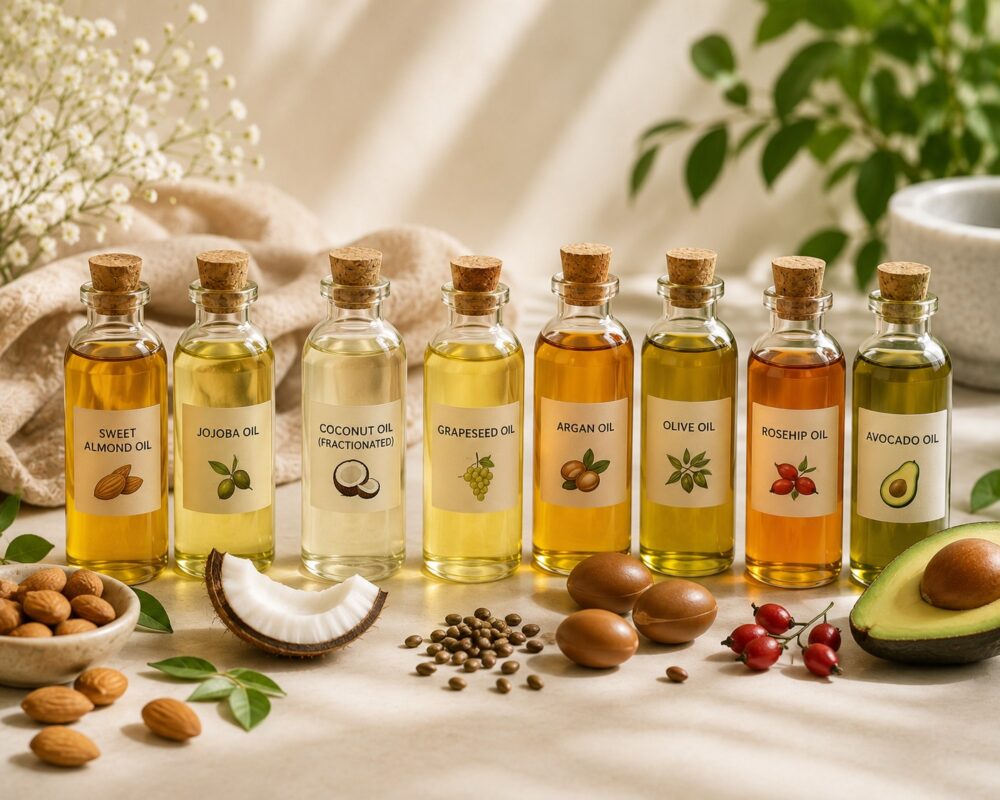
Best Carrier Oils for Skincare Formulations
Jul
Best Carrier Oils for Skincare Formulations: A Complete Guide for Beginners
Carrier oils are one of the most important ingredients in skincare formulation. Whether you’re creating facial serums, body oils, lotions, creams, massage oils, lip balms, or handmade cosmetics, choosing the right carrier oil can significantly influence the texture, stability, absorption, and overall performance of your product.
Unlike essential oils, carrier oils are mild, nourishing plant-derived oils that are used to dilute concentrated ingredients while providing moisturizing and skin-conditioning benefits. Each carrier oil has its own unique fatty acid profile, texture, and absorption rate, making it suitable for different skin types and cosmetic applications.
This guide explores the best carrier oils for skincare formulations, their properties, benefits, recommended uses, and tips for selecting the right oil for your products.
What Are Carrier Oils?
Carrier oils are vegetable oils extracted from seeds, nuts, kernels, or fruits of plants. They serve as the base of many skincare and cosmetic products, helping to carry essential oils, botanical extracts, and active ingredients while moisturizing and protecting the skin.
Carrier oils are commonly used in:
- Facial serums
- Moisturizers
- Creams
- Lotions
- Massage oils
- Body oils
- Lip balms
- Hair oils
- Beard oils
- Soap making
Why Are Carrier Oils Important?
Carrier oils provide several essential benefits in cosmetic formulations:
- Moisturize and soften the skin
- Improve product spreadability
- Help dilute essential oils safely
- Support the skin barrier
- Enhance skin feel
- Improve formulation stability
- Deliver botanical nutrients
The right carrier oil can improve both the performance and sensory experience of your skincare product.
1. Sweet Almond Oil
Best For
- Facial oils
- Body lotions
- Massage oils
- Creams
- Baby care products
Benefits
- Lightweight texture
- Excellent skin conditioning
- Easily absorbed
- Suitable for most skin types
2. Jojoba Oil
Best For
- Facial serums
- Oily skin formulations
- Acne-prone skin
- Beard oils
- Hair serums
Benefits
- Non-greasy
- Highly stable
- Fast absorbing
- Excellent shelf life
3. Argan Oil
Best For
- Anti-aging products
- Hair care
- Facial oils
- Luxury skincare
Benefits
- Rich in Vitamin E
- Lightweight
- Smooth skin feel
- Premium marketing appeal
4. Grapeseed Oil
Best For
- Oily skin
- Massage oils
- Facial serums
- Lightweight lotions
Benefits
- Non-greasy
- Fast absorption
- Light texture
- Easy to blend
5. Rosehip Oil
Best For
- Facial serums
- Night oils
- Mature skin
- Luxury skincare products
Benefits
- Lightweight
- Rich in essential fatty acids
- Elegant skin feel
6. Coconut Oil
Best For
- Body butter
- Lip balm
- Soap making
- Hair masks
Benefits
- Rich texture
- Excellent emollient
- Popular natural ingredient
Fractionated Coconut Oil is often preferred when a lighter texture is desired.
7. Avocado Oil
Best For
- Dry skin products
- Body creams
- Winter skincare
- Hair treatments
Benefits
- Rich consistency
- Highly moisturizing
- Excellent for conditioning formulations
8. Olive Oil
Best For
- Soap making
- Massage oils
- Traditional skincare
- Body oils
Benefits
- Rich emollient
- Natural botanical appeal
- Excellent for artisan products
9. Castor Oil
Best For
- Lip balms
- Hair oils
- Beard oils
- Soap making
Benefits
- Thick texture
- Adds shine
- Excellent blending ingredient
10. Sunflower Oil
Best For
- Lotions
- Creams
- Body oils
- Massage blends
Benefits
- Lightweight
- Affordable
- Suitable for many formulations
Choosing Carrier Oils by Skin Type
Dry Skin
- Avocado Oil
- Sweet Almond Oil
- Argan Oil
- Olive Oil
Oily Skin
- Jojoba Oil
- Grapeseed Oil
- Fractionated Coconut Oil
Sensitive Skin
- Sweet Almond Oil
- Jojoba Oil
- Sunflower Oil
Mature Skin
- Rosehip Oil
- Argan Oil
- Avocado Oil
Carrier Oils for Different Products
| Product | Recommended Carrier Oils |
|---|---|
| Facial Serum | Jojoba Oil, Rosehip Oil, Argan Oil |
| Body Oil | Sweet Almond Oil, Grapeseed Oil, Sunflower Oil |
| Massage Oil | Sweet Almond Oil, Grapeseed Oil, Coconut Oil |
| Hair Oil | Argan Oil, Coconut Oil, Castor Oil |
| Lip Balm | Castor Oil, Coconut Oil, Sweet Almond Oil |
Tips for Choosing High-Quality Carrier Oils
- Cosmetic-grade quality
- Fresh aroma
- Proper labeling
- Batch information
- Reliable supplier
- Appropriate packaging
- Clear botanical name
Storage Guidelines
- Store in tightly sealed bottles.
- Keep away from sunlight.
- Store in a cool, dry place.
- Avoid excessive heat.
- Minimize air exposure after opening.
Safety Tips
- Use cosmetic-grade oils.
- Wear gloves when formulating.
- Label all ingredients clearly.
- Store away from children and pets.
- Test formulations before large-scale production.
- Perform patch testing where appropriate.
Frequently Asked Questions
What is the best carrier oil for beginners?
Sweet Almond Oil and Jojoba Oil are excellent choices because they are versatile, easy to work with, and suitable for many skincare products.
Can I mix different carrier oils?
Yes. Many professional formulations combine multiple carrier oils to achieve the desired texture, absorption rate, and skin feel.
Which carrier oil absorbs the fastest?
Grapeseed Oil and Jojoba Oil are among the fastest-absorbing carrier oils commonly used in skincare.
Which carrier oil is best for facial serums?
Jojoba Oil, Rosehip Oil, and Argan Oil are popular options due to their lightweight feel and premium positioning.
How long do carrier oils last?
Shelf life varies depending on the oil, processing method, storage conditions, and the presence of antioxidants. Always check the supplier’s specifications and store oils correctly.
Final Thoughts
Choosing the right carrier oil is one of the most important steps in developing high-quality skincare products. Every oil offers unique characteristics that influence texture, absorption, stability, and the overall user experience. Whether you’re formulating facial serums, body lotions, massage oils, lip balms, or handmade cosmetics, selecting high-quality carrier oils will help you create products that feel luxurious and perform consistently.
Start with versatile oils like Sweet Almond Oil or Jojoba Oil, experiment with small batches, document your formulations carefully, and gradually expand your ingredient library. With practice and thoughtful formulation, you’ll be able to create skincare products that are effective, elegant, and tailored to a wide range of skin types.
