
Blog
How to Make Perfume Oil Roll-On
Jul
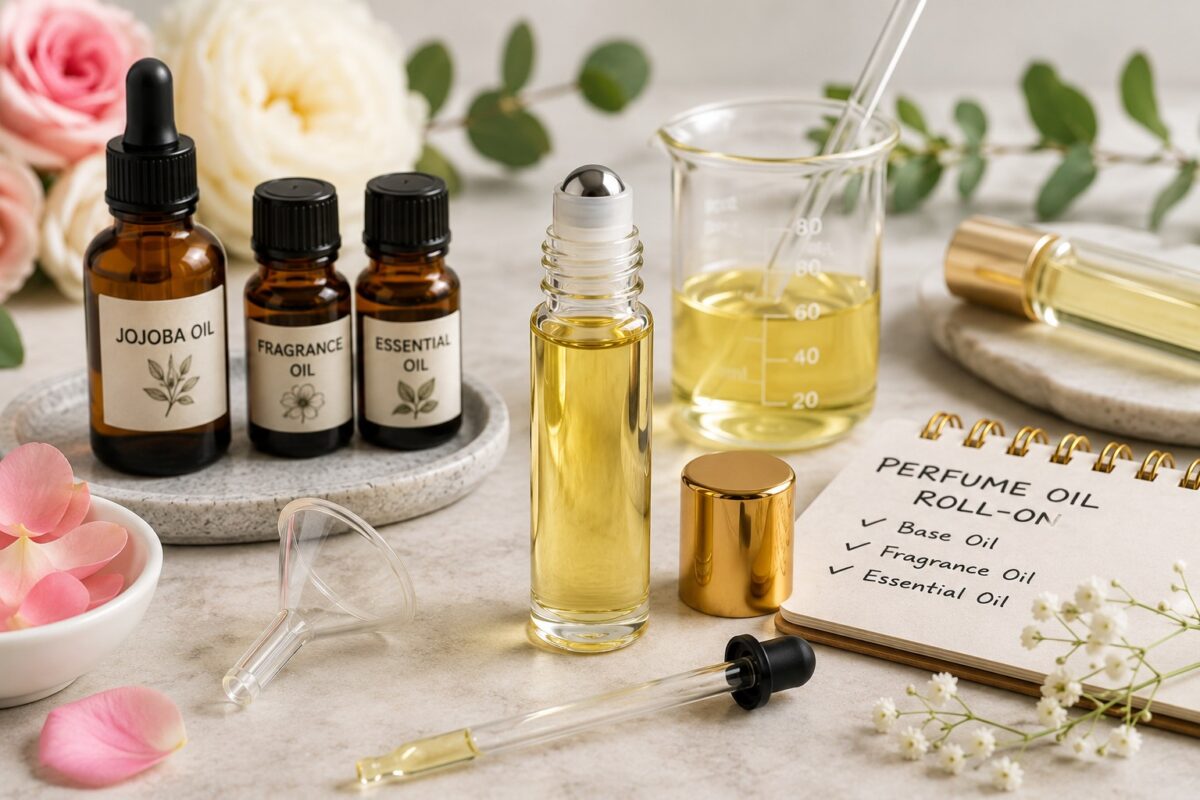
How to Make Perfume Oil Roll-On: A Complete DIY Guide for Beginners
Perfume oil roll-ons have become one of the most popular fragrance products because they are compact, alcohol-free, travel-friendly, and easy to apply. Unlike traditional spray perfumes, roll-on perfumes deliver fragrance directly to pulse points, providing a more intimate and long-lasting scent experience.
Whether you’re making perfume oil roll-ons for personal use, gifts, or starting your own fragrance business, creating them is surprisingly simple. With just a few quality ingredients and the right packaging, you can formulate luxurious perfume oils that look professional and perform beautifully.
This guide covers everything you need to know about making perfume oil roll-ons, including ingredients, carrier oils, fragrance ratios, blending tips, packaging, storage, and safety recommendations.
What Is a Perfume Oil Roll-On?
A perfume oil roll-on is an oil-based fragrance packaged in a bottle fitted with a roller ball applicator. Instead of spraying fragrance into the air, the roller ball applies the perfume directly onto the skin.
Perfume oil roll-ons are commonly used for:
- Everyday personal fragrance
- Travel perfumes
- Pocket-sized perfumes
- Alcohol-free perfumes
- Aromatherapy blends
- Gift sets
- Luxury fragrance collections
Benefits of Perfume Oil Roll-Ons
- Alcohol-free formulation
- Longer-lasting fragrance on skin
- Travel friendly
- Leak-resistant packaging
- Easy application
- Less fragrance wastage
- Premium appearance
- Ideal for gifting
- Easy to manufacture
Ingredients You’ll Need
Essential Ingredients
- Perfume Oil
- Carrier Oil
- Roll-On Bottle
- Roller Ball
- Leak-Proof Cap
Optional Ingredients
- Vitamin E Oil
- Cosmetic-grade Antioxidants
- Decorative Labels
- Shrink Bands
- Gift Boxes
Choosing the Right Carrier Oil
The carrier oil influences how the perfume feels on the skin and how well it performs.
Jojoba Oil
Best For
- Premium perfume oils
- Fast absorption
- Long shelf life
Benefits
- Lightweight
- Non-greasy
- Stable
Fractionated Coconut Oil (FCO)
Best For
- Everyday perfume oils
- Roll-ons
- Warm climates
Benefits
- Clear appearance
- Odorless
- Lightweight
Sweet Almond Oil
Best For
- Luxury perfumes
- Body oils
Benefits
- Smooth application
- Moisturizing
- Affordable
Grapeseed Oil
Best For
- Lightweight perfumes
- Fast absorption
Benefits
- Non-greasy
- Easy spreading
Choosing the Right Perfume Oil
Select perfume oils specifically intended for personal fragrance use.
Floral
- Rose
- Jasmine
- Lavender
- Lily
- Peony Blossom
Fresh
- Ocean Breeze
- Fresh Linen
- Green Tea
- Aqua
Woody
- Sandalwood
- Cedarwood
- Oud
- Patchouli
Gourmand
- Vanilla
- Coffee
- Chocolate
- Caramel
Oriental
- Amber
- White Musk
- Incense
- Oud
Basic Perfume Oil Formula
A beginner-friendly formulation:
- 20–30% Perfume Oil
- 70–80% Carrier Oil
Example for a 10 ml Bottle
- 2.5 ml Perfume Oil
- 7.5 ml Carrier Oil
Always follow the fragrance supplier’s recommended usage levels.
Equipment You’ll Need
- Digital Scale
- Glass Beaker
- Pipettes
- Glass Stirring Rod
- Funnel
- Roll-On Bottles
- Roller Balls
- Caps
- Gloves
- Labels
Using clean equipment helps maintain product quality.
Step-by-Step Instructions
Step 1: Prepare Your Workspace
Work in a clean, dry, and well-ventilated area. Clean all bottles and equipment before beginning.
Step 2: Measure the Perfume Oil
Accurately measure the required amount of perfume oil.
Step 3: Add the Carrier Oil
Measure the carrier oil and combine it with the perfume oil. Mix gently until completely uniform.
Step 4: Fill the Bottle
Using a funnel or pipette, fill the roll-on bottle while leaving a small headspace.
Step 5: Install the Roller Ball
Press the roller ball securely into place and ensure it rotates smoothly.
Step 6: Attach the Cap
Tighten the cap firmly. Allow the perfume to mature for 24–72 hours before evaluating the scent.
Popular Perfume Oil Blends
Floral Elegance
- Rose
- Jasmine
- White Musk
Fresh Morning
- Bergamot
- Green Tea
- Fresh Linen
Luxury Oud
- Oud
- Amber
- Sandalwood
Sweet Vanilla
- Vanilla
- Caramel
- White Musk
Modern Men’s Blend
- Cedarwood
- Bergamot
- Amber
Choosing the Right Roll-On Bottle
Popular bottle sizes include:
- 5 ml
- 8 ml
- 10 ml
- 15 ml
- 20 ml
Bottle styles:
- Clear Glass
- Amber Glass
- Frosted Glass
- Matte Black Glass
- Cobalt Blue Glass
Roller ball options:
- Stainless Steel
- Glass
- Plastic
Packaging Ideas
- Luxury Gift Boxes
- Kraft Boxes
- Window Boxes
- Velvet Pouches
- Printed Cartons
- Shrink Sleeves
Tips for Better Performance
- Use premium-quality perfume oils.
- Choose stable carrier oils.
- Measure ingredients accurately.
- Test small batches first.
- Allow perfumes to mature before use.
- Keep bottles tightly sealed.
- Record every formulation.
Common Mistakes to Avoid
- Using low-quality fragrance oils
- Adding too much perfume oil
- Using unstable carrier oils
- Filling dirty bottles
- Ignoring fragrance testing
- Scaling production before testing
- Poor bottle sealing
Storage Guidelines
- Store in tightly sealed bottles.
- Keep away from sunlight.
- Store in a cool, dry place.
- Avoid excessive heat.
- Protect from moisture.
Proper storage helps preserve fragrance quality.
Safety Tips
- Use cosmetic-grade ingredients.
- Wear gloves while handling concentrated fragrance oils.
- Avoid direct eye contact.
- Keep away from children and pets.
- Label products clearly.
- Perform patch testing where appropriate.
- Follow supplier recommendations and Safety Data Sheets (SDS).
Frequently Asked Questions
Which carrier oil is best for perfume roll-ons?
Jojoba Oil and Fractionated Coconut Oil are among the most popular choices because they are lightweight, stable, and nearly odorless.
Can I use essential oils instead of perfume oils?
Yes. Essential oils can be used in suitable perfume oil formulations, but fragrance performance, longevity, and skin compatibility may differ from professionally blended perfume oils.
How long does a perfume oil roll-on last?
Shelf life depends on the ingredients, packaging, and storage conditions. Properly stored perfume oil roll-ons made with high-quality ingredients can remain stable for an extended period.
Can I mix different perfume oils?
Yes. Blending multiple perfume oils is common practice and allows you to create unique signature fragrances.
Can I sell homemade perfume oil roll-ons?
Yes. If you plan to sell them, use cosmetic-grade ingredients, comply with local cosmetic regulations, label products accurately, and conduct appropriate stability and compatibility testing.
Final Thoughts
Perfume oil roll-ons are one of the easiest and most elegant fragrance products to create. By combining premium perfume oils with high-quality carrier oils and attractive roll-on bottles, you can produce luxurious fragrances that are convenient, long-lasting, and enjoyable to use.
Whether you’re creating roll-ons for personal use, thoughtful gifts, or launching your own fragrance brand, start with small batches, test your formulations carefully, and document every blend. With quality ingredients, professional packaging, and consistent craftsmanship, you can develop signature perfume oil roll-ons that stand out in the growing fragrance market.
