
Blog
Beginner’s Guide to Making Perfume at Home
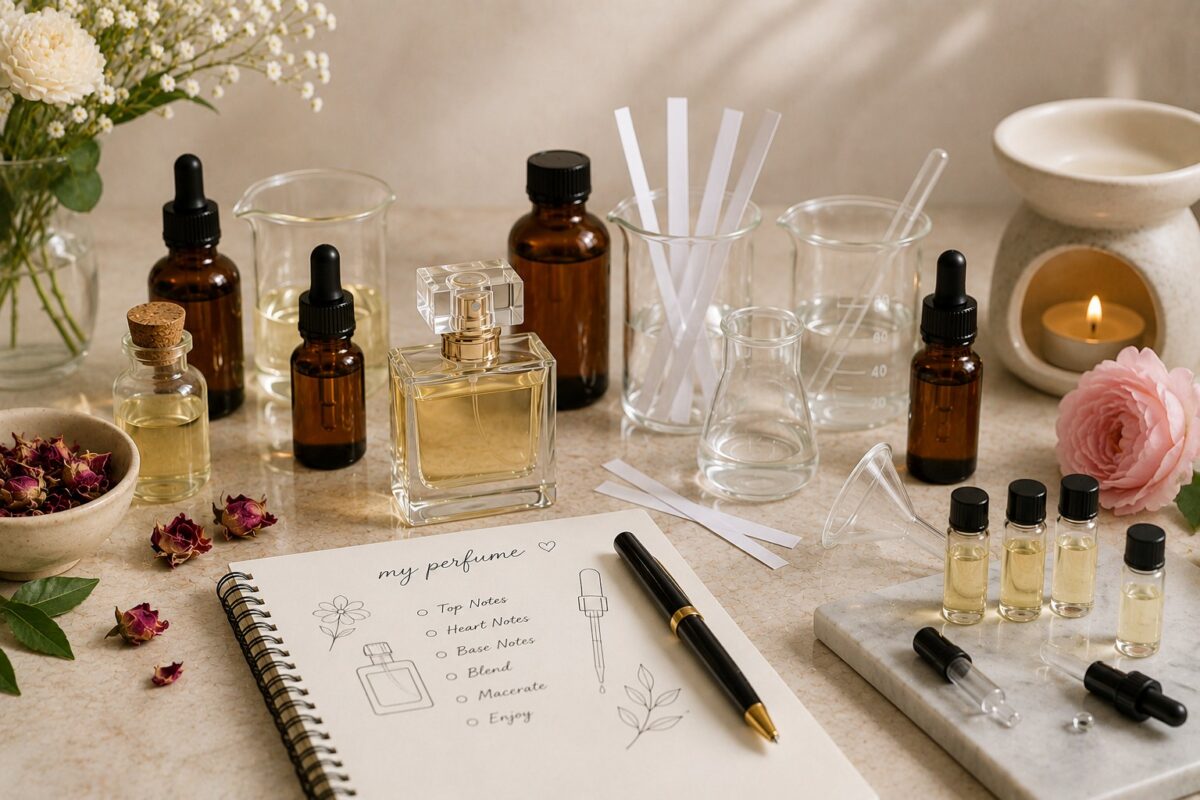
Jul
Beginner’s Guide to Making Perfume at Home
Making perfume at home is a creative and enjoyable way to design your own signature fragrance. Whether you love floral, fruity, woody, fresh, musky, or spicy scents, DIY perfume making allows you to experiment with different ingredients and create a fragrance that feels personal and unique.
For beginners, perfume making may look complicated at first, but the basic process is simple. You need fragrance ingredients, a perfume base, clean bottles, and a basic understanding of fragrance notes. Once you learn how top, middle, and base notes work together, you can start building beautiful perfume blends at home.
This guide explains the essentials of homemade perfume making, including ingredients, tools, simple formulas, blending steps, safety tips, and storage methods.
What Is Perfume?
Perfume is a scented liquid made by blending aromatic ingredients with a base such as alcohol, oil, or a perfume solvent. The aromatic ingredients may include essential oils, fragrance oils, aroma chemicals, absolutes, or natural extracts.
A good perfume is not just one smell. It is a balanced composition that changes over time after application. This development is known as the fragrance dry-down.
Understanding Perfume Notes
Perfumes are commonly built using three layers of notes.
Top Notes
Top notes are the first scents you smell after applying perfume. They are usually fresh, light, and fast evaporating.
- Lemon
- Bergamot
- Orange
- Peppermint
- Eucalyptus
- Green Apple
Top notes create the first impression of the perfume.
Middle Notes
Middle notes, also called heart notes, appear after the top notes begin to fade. They form the main body of the fragrance.
- Rose
- Jasmine
- Lavender
- Geranium
- Cinnamon
- Neroli
Middle notes give character and personality to the perfume.
Base Notes
Base notes are the longest-lasting part of the perfume. They add depth, warmth, and richness.
- Sandalwood
- Vanilla
- Patchouli
- Musk
- Amber
- Cedarwood
Base notes help the fragrance stay longer on the skin.
Basic Ingredients Needed
- Essential oils
- Fragrance oils
- Aroma chemicals
- Perfume alcohol or perfumer’s alcohol
- Carrier oil for oil-based perfume
- Distilled water, if required
- Glass perfume bottles
- Droppers or pipettes
- Measuring beakers
- Funnel
- Labels
- Notebook for formulas
Always use clean tools and good-quality ingredients for the best result.
Alcohol-Based Perfume vs. Oil-Based Perfume
Alcohol-Based Perfume
Alcohol-based perfume is the most common type of spray perfume. It feels light, spreads easily, and gives better projection.
- Spray perfumes
- Body perfumes
- Fine fragrances
- Stronger scent throw
Oil-Based Perfume
Oil-based perfume uses carrier oils instead of alcohol. It is usually applied with a roll-on bottle.
- Roll-on perfumes
- Travel perfumes
- Personal use
- Softer fragrance experience
Both types are useful, and beginners can try both to understand the difference.
Simple Perfume Formula for Beginners
- 20% fragrance blend
- 80% perfume alcohol
For 10 ml perfume:
- 2 ml fragrance blend
- 8 ml perfume alcohol
For a softer perfume, use 10–15% fragrance blend and 85–90% perfume alcohol. For a stronger perfume, use 20–25% fragrance blend and 75–80% perfume alcohol.
Simple Oil-Based Perfume Formula
To make a 10 ml roll-on perfume:
- 1 ml fragrance blend
- 9 ml carrier oil
Suitable carrier oils include jojoba oil, fractionated coconut oil, sweet almond oil, and grapeseed oil. Jojoba oil is popular because it has a light texture and good stability.
Easy Beginner Perfume Blend Ideas
Fresh Citrus Perfume
- 5 drops Lemon
- 4 drops Orange
- 3 drops Bergamot
- 2 drops Cedarwood
This blend feels fresh, bright, and clean.
Floral Perfume
- 5 drops Rose
- 4 drops Jasmine
- 3 drops Lavender
- 2 drops Sandalwood
This blend is soft, elegant, and romantic.
Woody Perfume
- 5 drops Sandalwood
- 4 drops Cedarwood
- 3 drops Patchouli
- 2 drops Bergamot
This blend feels warm, earthy, and sophisticated.
Sweet Vanilla Perfume
- 5 drops Vanilla
- 4 drops Sweet Orange
- 3 drops Sandalwood
- 2 drops Cinnamon
This blend gives a cozy, sweet, and warm aroma.
Step-by-Step Method to Make Perfume at Home
Step 1: Choose Your Fragrance Style
First decide what type of perfume you want to make. Popular fragrance styles include floral, fruity, fresh, woody, musky, spicy, sweet, and oriental.
Step 2: Create Your Fragrance Blend
Start by mixing small quantities of top, middle, and base notes. A simple ratio is 30% top notes, 50% middle notes, and 20% base notes.
Step 3: Add Perfume Base
Once the fragrance blend smells balanced, add it to perfume alcohol or carrier oil.
Step 4: Mix Gently
Close the bottle and shake gently. Avoid aggressive shaking because it can create bubbles.
Step 5: Let It Mature
Allow your perfume to rest for at least 1 to 2 weeks. Some perfumes smell better after 3 to 4 weeks of aging.
Step 6: Test and Adjust
After maturation, test your perfume on a blotter strip or skin. If it feels too strong, dilute it with more base. If it feels weak, increase the fragrance concentration carefully.
Common Perfume Making Mistakes
- Using too many ingredients at once
- Not writing down formulas
- Skipping maturation
- Using poor-quality bottles
- Adding too much fragrance oil
- Not testing on blotter strips
- Ignoring safety guidelines
- Expecting professional results immediately
Start simple and improve gradually.
Safety Tips for DIY Perfume Making
- Do not apply undiluted essential oils directly to skin.
- Use fragrance ingredients within recommended limits.
- Keep perfume materials away from children and pets.
- Work in a well-ventilated area.
- Avoid contact with eyes.
- Label every bottle clearly.
- Perform a patch test before personal use.
- Store alcohol-based perfumes away from flames and heat.
Safety is essential when working with concentrated fragrance materials.
How to Store Homemade Perfume
- In dark glass bottles
- Away from direct sunlight
- Away from heat
- In a cool, dry place
- With the cap tightly closed
Good storage helps maintain scent quality for longer.
Best Tools for Beginners
- 10 ml glass perfume bottles
- Roll-on bottles
- Pipettes
- Measuring cups
- Glass beakers
- Digital scale
- Blotter strips
- Labels
- Gloves
- Notebook
A digital scale is especially helpful for accurate and repeatable formulas.
Frequently Asked Questions
Can I make perfume at home without alcohol?
Yes. You can make oil-based roll-on perfume using carrier oils such as jojoba oil or fractionated coconut oil.
How long should homemade perfume mature?
Most homemade perfumes should rest for 1 to 2 weeks. Some blends improve after 3 to 4 weeks.
Which alcohol is best for perfume making?
Perfumer’s alcohol is commonly used because it is designed for fragrance applications. Avoid using unsafe or unsuitable alcohols.
Can I use only essential oils?
Yes, but combining essential oils with aroma chemicals or fragrance oils can improve performance, variety, and longevity.
Why does my perfume not last long?
It may need stronger base notes, better fixation, proper maturation, or a higher fragrance concentration.
Final Thoughts
Making perfume at home is a rewarding hobby that combines creativity, patience, and fragrance knowledge. By understanding perfume notes, choosing quality ingredients, following simple formulas, and allowing your blends to mature, you can create beautiful personal fragrances even as a beginner.
Start with small batches, write down every formula, and experiment slowly. Over time, your nose will become more trained, and your blends will become more balanced and professional.
Whether you want to make perfumes for yourself, gifts, or a small business, DIY perfume making is a wonderful way to explore the art of fragrance and create scents that truly reflect your personality.
