
Blog
How to Use Caustic Soda Safely in Soap Making
Jul
How to Use Caustic Soda Safely in Soap Making: A Complete Beginner’s Guide
Caustic soda, also known as Sodium Hydroxide (NaOH), is one of the most important ingredients used in making handmade soap. Although many beginners are intimidated by it, caustic soda can be used safely when handled correctly and with proper precautions.
Whether you’re making cold process soap, hot process soap, or starting your own handmade soap business, understanding how to work safely with Sodium Hydroxide is essential. Following good safety practices helps protect you, your workspace, and the quality of your finished soap.
In this guide, you’ll learn everything you need to know about safely using caustic soda, including protective equipment, mixing procedures, storage, and common mistakes to avoid.
What Is Caustic Soda?
Caustic soda, chemically known as Sodium Hydroxide (NaOH), is a strong alkali used to convert oils and fats into soap through a process called saponification.
When the correct amount of Sodium Hydroxide reacts with oils, the finished soap no longer contains free lye after proper curing.
Why Is Caustic Soda Necessary?
Traditional solid soap cannot be made without an alkali.
Sodium Hydroxide is responsible for:
- Converting oils into soap
- Producing natural glycerin during saponification
- Creating firm, long-lasting soap bars
- Allowing different oils to develop their cleansing and conditioning properties
Without NaOH, oils remain oils—they do not become soap.
Is Caustic Soda Dangerous?
In its raw form, Sodium Hydroxide is highly alkaline and must be handled carefully.
Potential hazards include:
- Skin burns
- Eye injuries
- Irritation from dust
- Heat generated when mixed with water
These risks can be greatly reduced by following proper safety procedures and wearing protective equipment.
Essential Safety Equipment
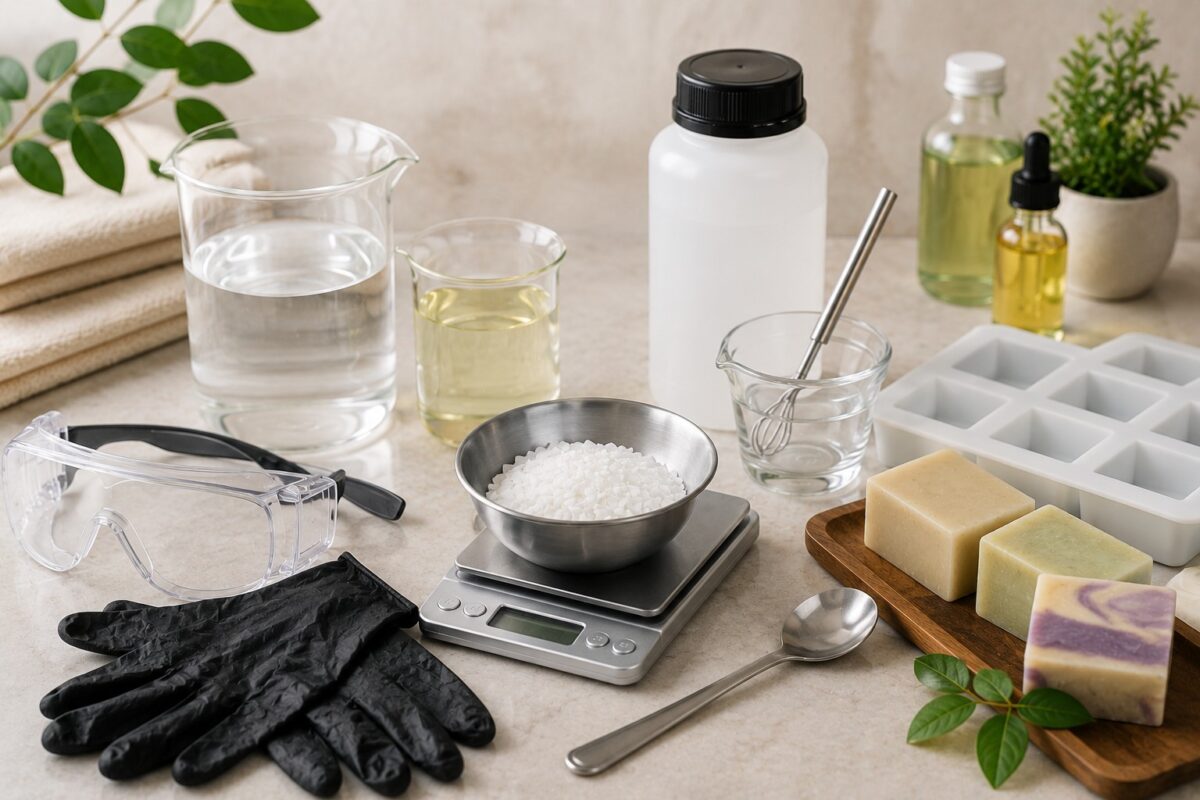
Before handling caustic soda, always wear:
- Chemical-resistant gloves
- Safety goggles or a face shield
- Long sleeves
- Long trousers
- Closed-toe shoes
- Protective apron, recommended
Avoid loose clothing that could catch on equipment.
Prepare a Safe Workspace
Choose a clean, organized work area with:
- Good ventilation
- A stable work surface
- Access to running water
- No food or drinks nearby
- No children or pets in the area
Keep all ingredients and tools within easy reach before you begin.
Always Add Lye to Water
One of the most important safety rules is:
Always add Sodium Hydroxide to water—never pour water onto Sodium Hydroxide.
Adding water directly to dry lye can cause a violent reaction and dangerous splashing.
Correct Method
- Measure the required amount of distilled water.
- Measure the Sodium Hydroxide separately.
- Slowly sprinkle the lye into the water while stirring gently.
- Allow the solution to cool before using it in your soap recipe.
Why Does the Mixture Get Hot?
When Sodium Hydroxide dissolves in water, it releases a significant amount of heat.
The lye solution may reach temperatures above 80–90°C (176–194°F), depending on the recipe.
Allow the solution to cool to the temperature recommended in your formulation before combining it with oils.
Use the Right Containers
Suitable materials include:
- Stainless steel
- Heat-resistant polypropylene (PP)
- HDPE plastic
- Heat-resistant glass designed for laboratory use, with care
Avoid:
- Aluminum
- Tin
- Copper
- Thin or decorative glass
Sodium Hydroxide reacts with aluminum and some other metals, making them unsafe for soap making.
Measure Ingredients Accurately
Soap making requires precision.
Always use:
- A digital scale
- Reliable soap calculator
- Cosmetic-grade ingredients
Never estimate ingredient amounts by eye.
Store Caustic Soda Properly
Keep Sodium Hydroxide:
- In a tightly sealed container
- In a cool, dry location
- Away from moisture
- Away from acids
- Clearly labeled
- Out of reach of children and pets
Exposure to moisture can reduce product quality because NaOH absorbs water from the air.
What If It Gets on Your Skin?
If caustic soda or fresh lye solution contacts your skin:
- Rinse immediately with plenty of cool running water.
- Remove contaminated clothing.
- Continue flushing the area thoroughly.
- Seek medical attention if irritation or burns are severe.
Always follow the safety instructions provided in the product’s Safety Data Sheet (SDS).
Protect Your Eyes
Eye protection is essential.
If lye enters the eyes:
- Flush immediately with clean water for at least 15 minutes.
- Seek emergency medical attention without delay.
Never work with Sodium Hydroxide without eye protection.
Common Beginner Mistakes
Avoid these common errors:
- Mixing water into dry lye
- Not wearing gloves
- Skipping eye protection
- Using aluminum containers
- Guessing ingredient weights
- Working in a cluttered area
- Leaving lye unattended
- Forgetting to label containers
Taking your time greatly improves both safety and soap quality.
Tips for Successful Soap Making
To build confidence:
- Start with simple recipes.
- Use trusted soap calculators.
- Measure everything accurately.
- Keep detailed formulation notes.
- Work slowly and carefully.
- Clean equipment immediately after use.
Experience and consistency are key to becoming a skilled soap maker.
Frequently Asked Questions
Can I make soap without caustic soda?
Traditional cold process and hot process soap require an alkali such as Sodium Hydroxide. Melt and pour soap bases have already completed the saponification process, so additional lye is not required.
Is finished soap safe?
When formulated correctly and fully cured, handmade soap should not contain free Sodium Hydroxide because it has reacted with the oils during saponification.
Why should I use distilled water?
Distilled water contains fewer minerals and impurities than tap water, helping improve consistency and reducing the chance of unwanted reactions.
Can I reuse containers?
Yes, provided they are made from suitable materials, thoroughly cleaned, and reserved for soap-making use.
How should beginners start?
Begin with small batches, follow a tested recipe, use a soap calculator, wear appropriate protective equipment, and work in a safe environment.
Final Thoughts
Using caustic soda safely is one of the most important skills every soap maker should learn. Although Sodium Hydroxide requires careful handling, following proper safety procedures makes soap making both safe and enjoyable. Wearing protective equipment, measuring ingredients accurately, using appropriate containers, and following proven recipes will help you create high-quality handmade soaps with confidence.
As you gain experience, safe handling practices will become second nature, allowing you to focus on developing beautiful soap recipes for personal use, gifts, or a successful handmade soap business.
