
Blog
How to Make Vitamin C Serum Using Ascorbic Acid
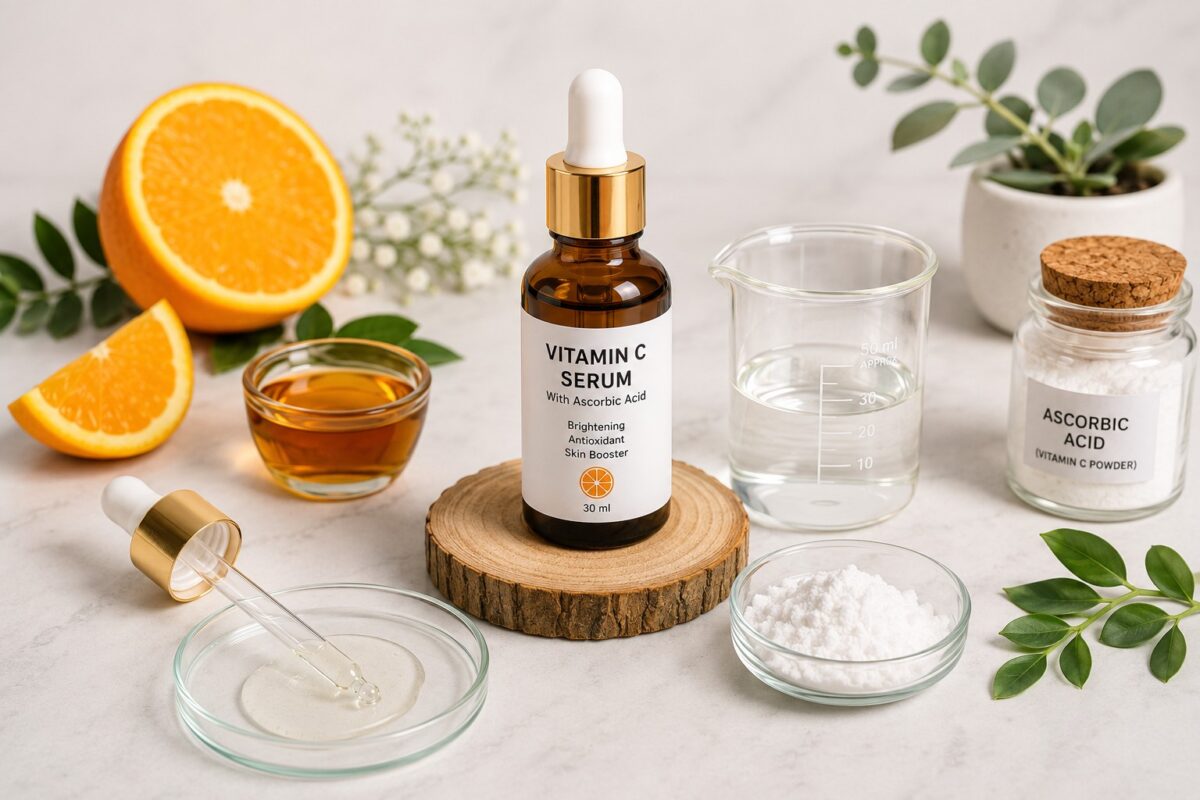
Jul
How to Make Vitamin C Serum Using Ascorbic Acid: A Complete DIY Guide
Vitamin C serum has become one of the most popular skincare products worldwide due to its ability to brighten the complexion, improve skin radiance, and support an even-looking skin tone. Among the different forms of Vitamin C used in cosmetics, L-Ascorbic Acid (Ascorbic Acid) is one of the most researched and widely used ingredients in professional skincare formulations.
Whether you’re a skincare enthusiast, DIY cosmetic maker, or planning to start your own skincare brand, learning how to formulate a Vitamin C serum correctly is essential. Because Ascorbic Acid is sensitive to air, light, and water, proper formulation, packaging, and storage play an important role in maintaining product quality.
What Is Ascorbic Acid?
Ascorbic Acid, also known as L-Ascorbic Acid, is the pure form of Vitamin C commonly used in skincare products.
- Brighten dull-looking skin
- Promote a more even-looking complexion
- Support antioxidant protection
- Improve the appearance of tired skin
- Enhance the overall look of healthy skin
Why Use Ascorbic Acid in a Serum?
- Improve skin radiance
- Support a brighter complexion
- Reduce the appearance of dullness
- Protect against environmental stressors through antioxidant action
- Enhance the appearance of smoother-looking skin
Ingredients You’ll Need
Essential Ingredients
- L-Ascorbic Acid (Vitamin C)
- Distilled Water
- Glycerin (optional)
- Propylene Glycol or Butylene Glycol (optional)
- Cosmetic Preservative (if required)
- pH Adjuster (if needed)
Optional Ingredients
- Hyaluronic Acid
- Vitamin E
- Ferulic Acid for advanced formulations
- Panthenol (Vitamin B5)
- Aloe Vera Extract
Equipment You’ll Need
- Digital Scale
- Glass Beaker
- Glass Stirring Rod
- pH Meter or pH Strips
- Pipettes
- Funnel
- Amber Glass Dropper Bottle
- Gloves
- Labels
Basic Vitamin C Serum Formula
- 10–20% Ascorbic Acid
- 70–85% Distilled Water
- 3–10% Humectants (optional)
- Preservative according to supplier recommendations
Example for a 100 g Batch
- 15 g Ascorbic Acid
- 75 g Distilled Water
- 8 g Glycerin
- 2 g Cosmetic Preservative, only where compatible and within the supplier’s recommended usage level
Always verify compatibility, pH range, and preservative requirements before preparing a finished formula.
Step-by-Step Instructions
Step 1: Prepare Your Workspace
Work in a clean, dry, and well-ventilated area. Disinfect all equipment before beginning.
Step 2: Measure the Ingredients
Accurately weigh each ingredient using a digital scale. Precision is essential for consistent formulations.
Step 3: Dissolve the Ascorbic Acid
Slowly add the Ascorbic Acid to the distilled water while stirring continuously until completely dissolved. Avoid excessive heating because high temperatures may reduce stability.
Step 4: Add Optional Ingredients
- Glycerin
- Panthenol
- Hyaluronic Acid
- Propylene Glycol
Mix gently until uniform.
Step 5: Check the pH
L-Ascorbic Acid serums are typically formulated within an acidic pH range for stability and performance. Measure the pH using a calibrated pH meter and adjust only if required according to your formulation design.
Step 6: Add Preservative
If your formulation contains water, incorporate a suitable broad-spectrum cosmetic preservative according to the supplier’s recommended usage rate and compatible pH range.
Step 7: Fill the Bottle
Transfer the finished serum into a clean amber glass dropper bottle or airless bottle. Leave minimal headspace to reduce air exposure.
Why pH Matters
- Improve ingredient stability
- Support consistent product quality
- Reduce formulation issues
- Improve shelf performance
Choosing the Right Bottle
- Amber Glass Dropper Bottles
- Frosted Glass Bottles
- Airless Pump Bottles
- UV-Protective Containers
Avoid clear bottles whenever possible.
Storage Guidelines
- Store in tightly sealed containers.
- Keep away from direct sunlight.
- Store in a cool, dry place.
- Avoid excessive heat.
- Minimize repeated air exposure.
Signs of Oxidation
- Dark yellow or orange color
- Brown discoloration
- Noticeable change in odor
- Reduced clarity
If significant changes occur, discontinue use and evaluate the product.
Tips for Better Formulations
- Use fresh Ascorbic Acid.
- Measure ingredients accurately.
- Use distilled water.
- Package in UV-protective bottles.
- Prepare small batches.
- Label the manufacturing date.
- Test stability before commercial production.
Common Mistakes to Avoid
- Using tap water instead of distilled water
- Skipping pH testing
- Using clear bottles
- Leaving bottles open for extended periods
- Using poor-quality raw materials
- Producing large batches before testing
Safety Tips
- Wear gloves while formulating.
- Use cosmetic-grade ingredients.
- Work in a clean environment.
- Avoid contamination.
- Store ingredients away from children and pets.
- Follow supplier recommendations.
- Review the Safety Data Sheet (SDS) for each ingredient.
- Patch test the finished product before wider use.
Frequently Asked Questions
What is the best concentration of Vitamin C for beginners?
Many beginner formulations use 10–15% Ascorbic Acid, while experienced formulators may develop products with higher concentrations after appropriate testing.
Why does Vitamin C serum turn yellow?
Color changes often indicate oxidation caused by exposure to air, light, or heat. Proper packaging and storage help slow this process.
Can I add Hyaluronic Acid?
Yes. Hyaluronic Acid is commonly combined with Vitamin C serums to improve hydration and skin feel, provided the formulation is properly designed and compatible.
Which bottle is best?
Amber glass dropper bottles and airless pump bottles are among the most popular choices because they help reduce exposure to light and air.
Can I sell homemade Vitamin C serum?
Yes, provided you comply with local cosmetic regulations, use cosmetic-grade ingredients, conduct stability and preservative efficacy testing where required, and label products accurately.
Final Thoughts
Vitamin C serum made with L-Ascorbic Acid is one of the most popular skincare products in modern cosmetics because of its brightening appearance benefits and antioxidant properties.
By using high-quality cosmetic-grade ingredients, measuring accurately, maintaining the correct pH, selecting protective packaging, and following good manufacturing practices, you can create a professional-quality serum suitable for personal use or commercial development.
Whether you’re formulating your first DIY serum or building a skincare brand, start with small batches, document every formulation carefully, perform appropriate stability testing, and continuously refine your recipes.
