
Blog
What is SLES and Where is it Used?
Jul
What Is SLES and Where Is It Used? A Complete Beginner’s Guide
If you’ve ever checked the ingredient list on a shampoo, body wash, face cleanser, hand wash, or liquid soap, you’ve likely seen Sodium Laureth Sulfate (SLES). It is one of the most widely used cleansing ingredients in the cosmetic and personal care industry because it provides excellent cleansing, rich foam, and a pleasant washing experience.
SLES is valued for its ability to remove dirt, excess oil, and impurities while being generally milder than some other surfactants. It is commonly found in shampoos, body washes, facial cleansers, bubble baths, liquid hand soaps, and many household cleaning products.
Whether you’re a DIY cosmetic formulator, a soap maker, or someone curious about cosmetic ingredients, understanding SLES will help you create effective and stable cleansing products.
What Is SLES?
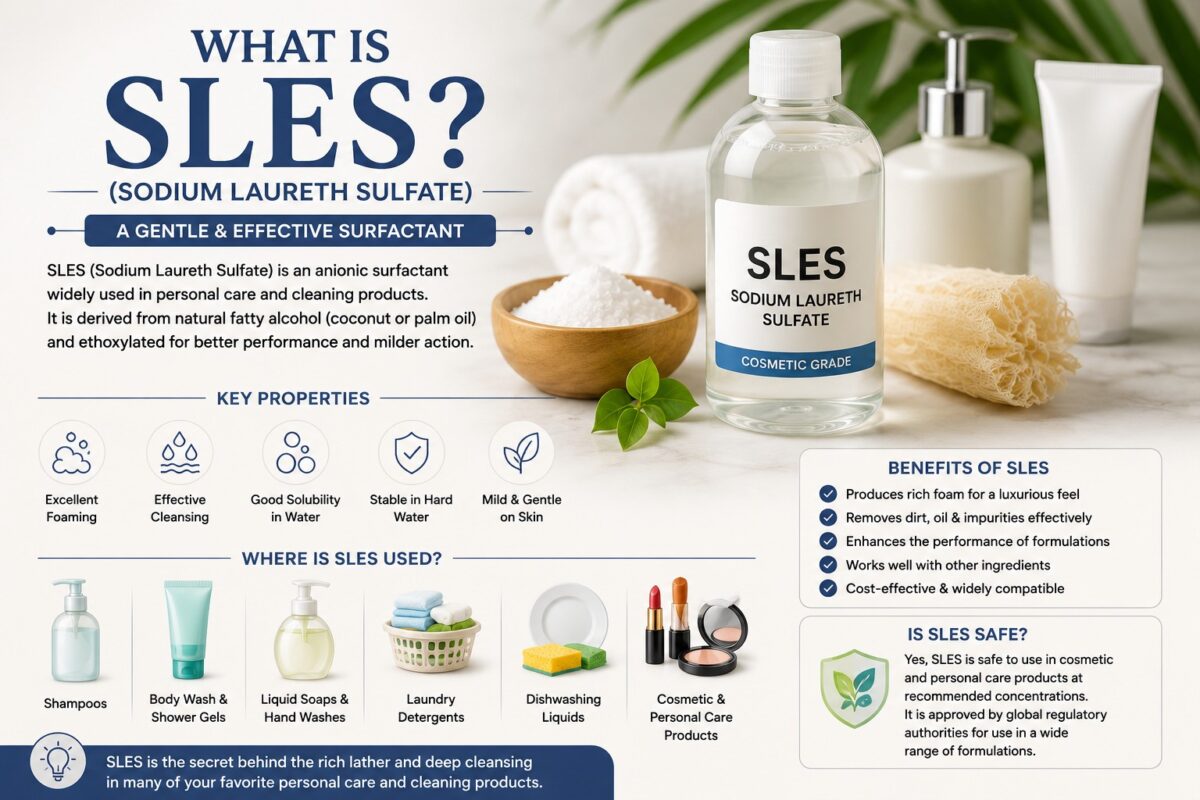
Sodium Laureth Sulfate (SLES) is an anionic surfactant widely used as a cleansing agent, foaming agent, and emulsifier in personal care and household products.
SLES is produced through a process called ethoxylation, which generally makes it milder than Sodium Lauryl Sulfate (SLS) while maintaining excellent cleansing and foaming performance.
Its balance of cleaning power and mildness makes it one of the most popular surfactants used in modern cosmetic formulations.
Why Is SLES Used?
SLES performs several important functions in cosmetic products.
- Remove dirt and excess oil
- Produce rich foam
- Improve cleansing performance
- Disperse oils into water
- Enhance product texture
- Improve rinsability
- Stabilize formulations
These properties make it suitable for a wide range of rinse-off personal care products.
Physical Properties of SLES
- Clear to pale yellow viscous liquid
- Mild characteristic odor
- Water-soluble
- Excellent foaming ability
- Good cleansing performance
- Compatible with many surfactants
- Easy to formulate
Because of its versatility, SLES is widely used by both large manufacturers and small cosmetic businesses.
Common Uses of SLES
Hair Care
- Shampoos
- Clarifying shampoos
- Anti-dandruff shampoos
- Family shampoos
- Pet shampoos
Skin Care
- Face cleansers
- Facial washes
- Cleansing gels
- Makeup removers (rinse-off)
Bath & Body
- Body wash
- Shower gel
- Bubble bath
- Hand wash
- Liquid soap
Personal Care
- Shaving foam
- Shaving cream
- Baby wash in specially formulated products
- Feminine hygiene cleansers where appropriate
Household Products
- Dishwashing liquids
- Multipurpose cleaners
- Car wash shampoos
- Surface cleaners
Benefits of SLES
1. Excellent Cleansing
SLES effectively removes:
- Dirt
- Sweat
- Excess sebum
- Environmental impurities
It helps clean without leaving excessive residue.
2. Rich Foam
Consumers often associate foam with effective cleansing. SLES creates:
- Dense lather
- Creamy foam
- Pleasant washing experience
3. Milder Than SLS
Compared with Sodium Lauryl Sulfate (SLS), SLES is generally considered milder because of its modified chemical structure.
This makes it a popular choice for products intended for frequent use.
4. Easy to Formulate
SLES blends well with:
- Cocamidopropyl Betaine (CAPB)
- Cocamide DEA alternatives
- Glycerin
- Conditioning agents
- Thickening agents
- Preservatives
- Fragrance oils
5. Cost-Effective
SLES offers an excellent balance of:
- Performance
- Availability
- Affordability
This makes it suitable for commercial-scale manufacturing.
SLES in Shampoo
SLES is one of the most common surfactants used in shampoos.
- Effective cleansing
- Rich foam
- Easy rinsing
- Pleasant feel
- Good compatibility with conditioning ingredients
Many daily-use shampoos are formulated with SLES.
SLES in Body Wash
Body washes commonly use SLES because it produces:
- Creamy lather
- Smooth skin feel
- Effective cleansing
- Easy rinse-off
Additional moisturizers are often included to improve skin comfort.
SLES in Face Cleansers
Many facial cleansers contain SLES in combination with milder surfactants to achieve:
- Gentle cleansing
- Balanced foam
- Improved skin feel
- Better compatibility with sensitive skin formulations
SLES vs. SLS
| SLES | SLS |
|---|---|
| Sodium Laureth Sulfate | Sodium Lauryl Sulfate |
| Generally milder | Stronger cleanser |
| Rich creamy foam | Rich dense foam |
| Common in daily-use products | Often used in stronger cleansing products |
| Lower irritation potential | Higher irritation potential |
Both ingredients are effective surfactants, but the overall formulation determines how mild or strong a finished product feels.
Typical Usage Levels
- Shampoos: 10–30%
- Body Wash: 5–20%
- Face Wash: 5–15%
- Liquid Soap: 10–30%
- Bubble Bath: According to formulation requirements
Always follow supplier technical documentation and conduct formulation testing before commercial production.
Formulation Tips
- Combine with milder co-surfactants for improved skin feel.
- Adjust pH to the recommended range.
- Add fragrance after cooling where appropriate.
- Perform stability testing.
- Test viscosity before production.
Storage Guidelines
- Store in tightly sealed containers.
- Keep away from direct sunlight.
- Store in a cool, dry place.
- Avoid excessive heat.
- Follow supplier recommendations.
Safety Tips
- Use cosmetic-grade SLES.
- Wear gloves when handling concentrated material.
- Avoid direct eye contact.
- Work in a well-ventilated area.
- Keep away from children and pets.
- Follow the Safety Data Sheet (SDS) provided by the supplier.
Always formulate products according to applicable cosmetic regulations and supplier recommendations.
Frequently Asked Questions
Is SLES the same as SLS?
No. Although they are closely related, SLES undergoes an additional manufacturing process that generally makes it milder than SLS.
Is SLES safe in cosmetics?
SLES is widely used in shampoos, body washes, liquid soaps, and facial cleansers. Its suitability depends on the overall formulation, concentration, intended use, and compliance with applicable cosmetic regulations.
Why does SLES produce so much foam?
SLES is an excellent foaming surfactant that traps air during washing, producing a rich and creamy lather.
Can SLES be used in handmade liquid soap?
Yes. SLES is commonly used in formulated liquid cleansers and shampoos. It is different from traditional lye-based handmade soap and is used in surfactant-based cleansing formulations.
Is SLES suitable for beginners?
Yes. SLES is one of the easiest surfactants to formulate with, making it a popular choice for beginners learning to make shampoos, body washes, and liquid soaps.
Final Thoughts
Sodium Laureth Sulfate (SLES) is one of the most important surfactants used in modern cosmetic and personal care formulations. Its excellent cleansing ability, rich foaming properties, ease of formulation, and generally milder performance compared with SLS make it a preferred ingredient for shampoos, body washes, face cleansers, liquid soaps, and many household cleaning products.
Whether you’re developing your first shampoo, formulating a luxurious body wash, or starting your own cosmetic manufacturing business, understanding how SLES works will help you create stable, effective, and high-quality cleansing products.
By using cosmetic-grade raw materials, following supplier recommendations, and conducting proper formulation testing, you can produce products that deliver reliable performance and an enjoyable user experience.
